


Navi Mumbai International Airport: Project Details, Status and Latest Updates
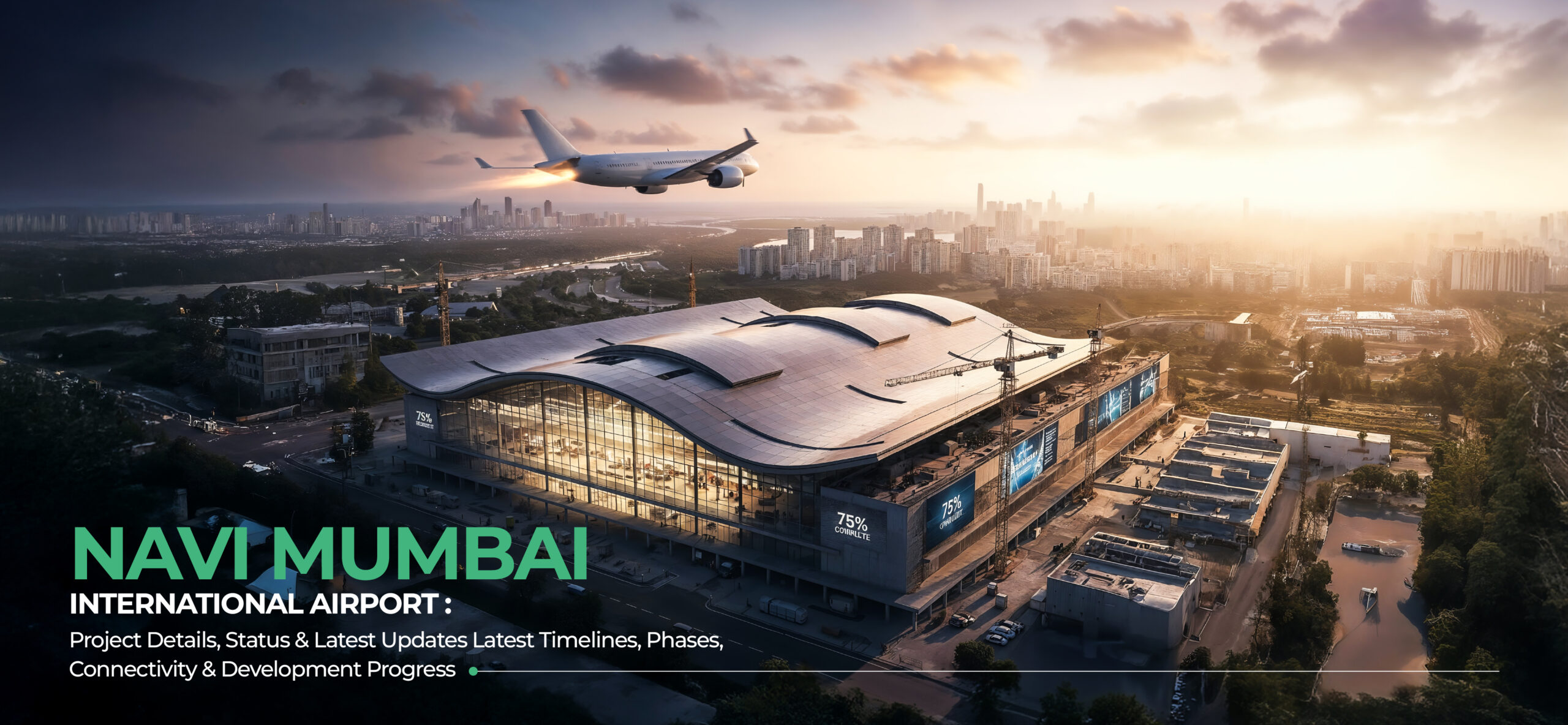
If you have been hearing about the Navi Mumbai International Airport for years and wondering when it will actually start, you are not alone. For many homebuyers, investors, and even daily commuters, this airport has been one of the most talked-about infrastructure projects in India.
The Navi Mumbai International Airport, also known as NMIA, is being built to reduce the pressure on Mumbai’s existing airport and support the growing population of the Mumbai Metropolitan Region. In 2025, the project has reached an important stage where construction is visibly close to completion. This blog explains the current construction status, development phases, connectivity improvements, and how the airport is expected to impact real estate markets like Panvel, Ulwe, and Dronagiri.
Current Construction Status of NMIA in 2025
As of 2025, the Navi Mumbai International Airport is in an advanced stage of construction. Most of the major structural work has already been completed, and the project has moved into its finishing and testing phase.
The project received its official inauguration earlier in 2025, and all major civil works, including the runway and terminal structures, have been completed. The regulatory authority has already granted the aerodrome licence, and airport authorities are conducting final operational readiness checks.
According to recent announcements, NMIA is scheduled to start commercial flight operations on 25 December 2025, marking a significant moment in India’s aviation history. In the first month, the airport will operate daily for about 12 hours, with planned take-offs and landings managed carefully as systems and services stabilise.
Phases of Development and Expected Launch Timeline
The Navi Mumbai International Airport is being developed in multiple phases to match future growth in air travel and cargo movement.
Phase 1 is designed to handle a large number of domestic and international passengers along with cargo operations. Once operational, it will significantly reduce congestion at Mumbai’s existing airport and improve travel convenience for people living in Navi Mumbai and nearby areas.
The airport is expected to handle around 20 million passengers annually once Phase 1 operations start. Future phases will expand this capacity significantly with potentially up to 90 million passengers per year that to, with additional terminals, runways, and cargo facilities being added over time.
These later stages may unfold through the late 2020s as travel demand grows and more airline operators increase their services from NMIA.
Connectivity Improvements and Infrastructure Growth
One of the biggest advantages of the Navi Mumbai International Airport is the strong infrastructure being developed around it. The airport is supported by multiple road, rail, and metro projects that are transforming travel across the region.
- The Mumbai Trans Harbour Link has already reduced travel time between South Mumbai and Navi Mumbai significantly. This has made areas near the airport much more accessible for daily commuters and business travelers.
- The upcoming Navi Mumbai Coastal Road is expected to further improve connectivity within Navi Mumbai. The JNPT corridor upgrades are strengthening movement of goods and supporting industrial and logistics growth.
- Metro connectivity is another major boost. Metro lines connecting Belapur, Taloja, and Khandeshwar are improving daily travel for residents and future airport employees. Road widening projects, better internal roads, and proposed water transport options are also part of the long-term plan.
Together, these infrastructure upgrades are making Navi Mumbai more connected, livable, and attractive for long-term development.
Impact on Real Estate Prices in Navi Mumbai
One of the most talked-about projects is the Mumbai Trans Harbour Link (MTHL), which dramatically cuts down travel time from South Mumbai to Navi Mumbai. This link is already easing traffic and bringing Ulwe and surrounding areas closer to the city centre.
In addition to MTHL, the Navi Mumbai Coastal Road is being built to improve east-west connectivity along the coast, making travel to the airport smoother for residents of Navi Mumbai. New link roads are also being developed around Morbe Circle and Kalamboli to connect directly to the airport zone, significantly reducing distance and commute times on these routes.
Public transport upgrades are also in progress, including metro expansions that will connect Belapur, Taloja, and Khandeshwar, giving daily commuters affordable and fast options. Improvements to the JNPT corridor and wider road networks further integrate the airport with major freight and logistics routes.
Overall, these connectivity projects are creating an ecosystem where travel to and from the airport becomes more convenient, reliable, and efficient.
Key Beneficiary Locations Around NMIA
- Panvel is one of the biggest beneficiaries of the Navi Mumbai International Airport. It offers strong road and rail connectivity and is also part of upcoming metro routes. Panvel has seen growing demand for residential projects, commercial developments, and mixed-use spaces. It suits both end users and long-term investors.
- Ulwe has gained attention due to its close proximity to the airport and direct access through the Mumbai Trans Harbour Link. Improved social infrastructure and planned commercial zones have made Ulwe a preferred location for homebuyers looking for future growth.
- Dronagiri is still at an early stage of development but holds strong long-term potential. Its proximity to JNPT, availability of land, and upcoming infrastructure projects make it attractive for investors who are willing to wait for appreciation over time.
Choosing the right location depends on budget, investment timeline, and whether the property is meant for self-use or investment.
Conclusion
The Navi Mumbai International Airport is set to redefine the region’s connectivity, economic activity, and real estate landscape. With commercial operations set to start on 25 December 2025, the airport will begin its journey as an important aviation hub for the Mumbai region. For homebuyers and investors, tracking NMIA’s development is essential for making informed decisions. Infrastructure-led growth rarely happens overnight, but when it does unfold, it reshapes cities for decades to come.
Thank you. Your comment will be visible after an approval.
Comments (0)
No comments found.





Add your comment