


Your Building May Soon Be Checked: What MHADA’s 2025 Structural Audit Means for You
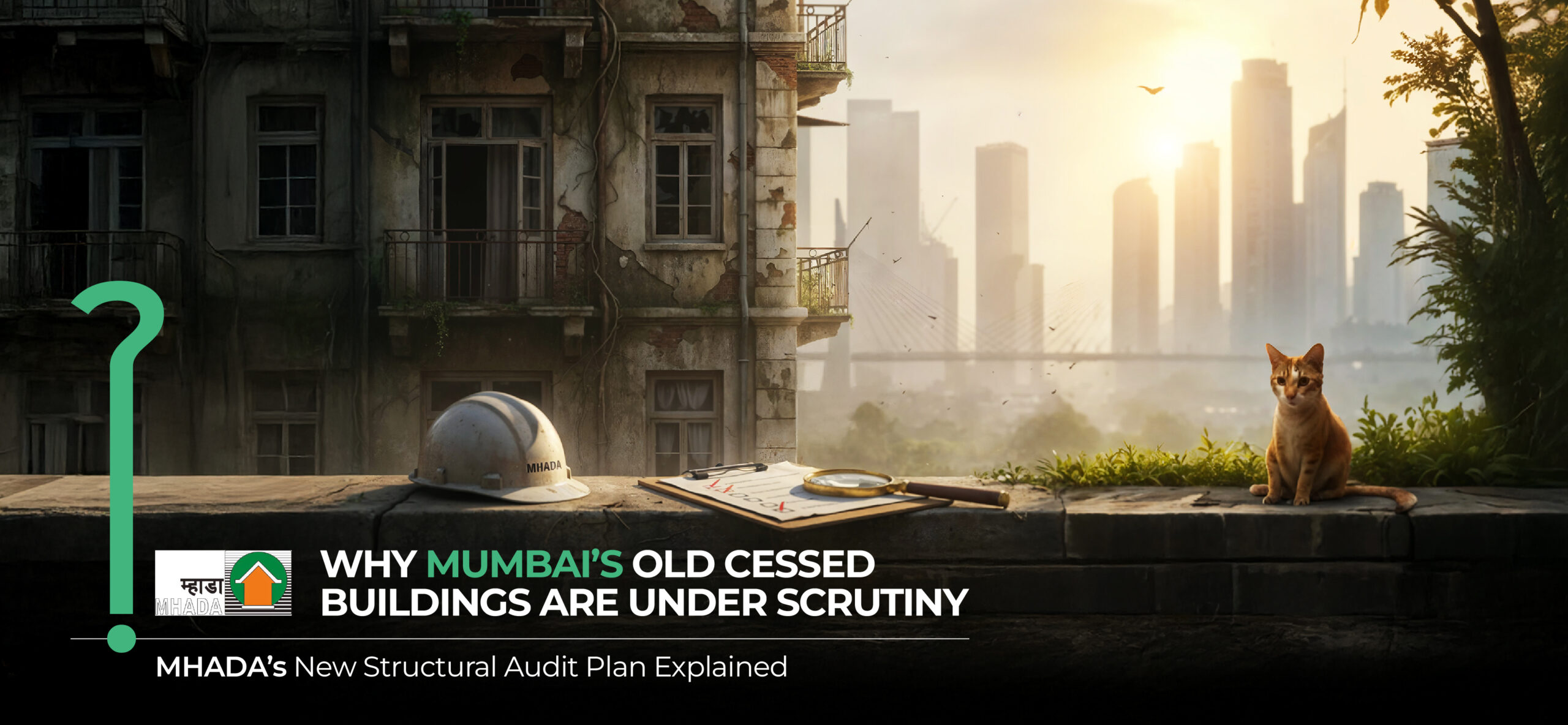
Mumbai is a city filled with decades-old structures, and many of these buildings have stood long past their intended lifespan. Many these ageing structures fall under the category of “cessed buildings,” which are known for their chronic repair issues and high safety risks. Recently, MHADA announced that it will conduct a structural audit of 1,000 cessed buildings by March 2025. This announcement has brought new attention to the condition of these buildings and the potential threats they pose to residents. As several building collapses have occurred in Mumbai in recent years, the need for a thorough and timely audit has become more urgent than ever. This blog explains why these buildings are under scrutiny, what the audit means, and how residents and buyers should prepare.
What Are Cessed Buildings?
Cessed buildings are old residential or commercial structures built before 1969. These buildings pay a special tax known as “cess” to the Mumbai Building Repair and Reconstruction Board (MBRRB), which is a part of MHADA. The purpose of this cess is to fund essential repairs and maintenance work for these ageing structures. Cessed buildings are usually classified into three categories based on their age:
Category A includes buildings constructed before 1940,
Category B includes those built between 1941 and 1950, and
Category C includes structures constructed between 1951 and 1969.
Most of these buildings suffer from multiple problems such as water leakage, weak foundations, worn-out beams, and outdated electrical systems. Maintenance delays, inadequate repair funds, and disputes between tenants and landlords often make the situation worse. Over time, these issues can cause serious structural instability, making some of these buildings vulnerable to partial or complete collapse. This risk is especially high during the monsoon season, when weakened structures struggle to withstand heavy rainfall.
Why These Buildings Are Considered High-Risk
There are several reasons why cessed buildings are seen as high-risk structures. Many of them are more than 60 to 80 years old, which means their original building materials have long weakened. According to various reports, a significant percentage of building collapses in Mumbai involve pre-1970 structures, with cessed buildings forming a major part of that group. These buildings often house a high population density with multiple tenants living in small units. This makes evacuation extremely challenging in case of an emergency.
In many cases, redevelopment plans have been stuck for years due to disagreements between tenants, landlords, and developers. As a result, residents continue to live in unsafe buildings that urgently require either major repairs or complete reconstruction. Some buildings lack proper fire safety systems, functioning lifts, or stable staircases. These issues collectively make cessed buildings one of Mumbai’s most vulnerable categories of real estate.
MHADA’s 2025 Structural Audit Plan
To reduce safety risks and prevent further collapses, MHADA has announced that it will conduct structural audits of 1,000 cessed buildings by March 2025. The primary goal of this project is to assess the health of ageing structures and identify which buildings require immediate evacuation, repairs, or redevelopment. The audit will focus first on the most dilapidated buildings, as they pose the highest danger to residents.
During the audit, structural engineers and on-ground teams will carry out detailed inspections to check for cracks, corrosion, weakened foundations, and water damage. They will also evaluate the load-bearing capacity of each building and determine whether repairs are possible or if redevelopment is the only safe option. After the inspection, each building will receive a safety certification that states whether the structure is safe to live in.
This audit is expected to push forward long-delayed redevelopment projects and ensure that residents no longer have to live in dangerous conditions. It will also help the government update its records and create a clear, transparent list of risky buildings that require urgent attention.
Safety Implications for Residents and Buyers
Residents living in cessed buildings should take audit notifications very seriously. Once a building is declared unsafe, authorities may issue evacuation notices to protect the lives of the occupants. In some cases, residents may be asked to shift to temporary accommodation or transit camps until repairs or redevelopment are completed. The audit results may also lead to mandatory repair work that needs to be completed within a specific timeframe.
Buyers interested in purchasing property in Mumbai should also pay close attention to the condition of cessed buildings. Investing in an extremely old building without understanding its structural condition can lead to financial and legal complications later. Prospective buyers should always check the latest audit status, structural reports, redevelopment progress, and tenant-developer agreements before making a decision. It is also important to understand your rights as a tenant or a buyer, especially with regard to redevelopment benefits and compensation in case of evacuation.
Redevelopment Opportunities for Mumbai’s Real Estate
Although cessed buildings pose several risks, they also offer tremendous redevelopment potential. Many redevelopment projects in Mumbai have transformed small, old structures into modern towers with larger homes, better amenities, and higher property values. Residents who live in these buildings can benefit from bigger apartments, improved infrastructure, and modern facilities after redevelopment.
The government has also introduced various incentives to encourage redevelopment, including FSI (Floor Space Index) benefits, fast-track approvals, and support from MHADA and BMC. However, redevelopment can still face challenges such as delays, disputes among stakeholders, and financial risks if the chosen developer is not reliable. Residents and societies must choose developers carefully and ensure that agreements are clear, transparent, and legally sound.
Conclusion
MHADA’s 2025 audit of Mumbai’s old cessed buildings is an important step toward improving safety and accelerating redevelopment across the city. These audits will help identify buildings that are unsafe, ensure timely repairs, and encourage communities to plan redevelopment in a more structured way. For residents, tenants, and buyers, this is the right time to stay informed and take the condition of their buildings seriously. By understanding the risks and upcoming changes, people can make better decisions about safety, investment, and long-term living conditions in Mumbai’s evolving real estate landscape.
Thank you. Your comment will be visible after an approval.
Comments (0)
No comments found.





Add your comment