


It is India’s most rigorous green building standard, evaluating energy, water, materials, and indoor environment quality.
Green Homes, Smarter Choices: The Rise of IGBC Certification in India
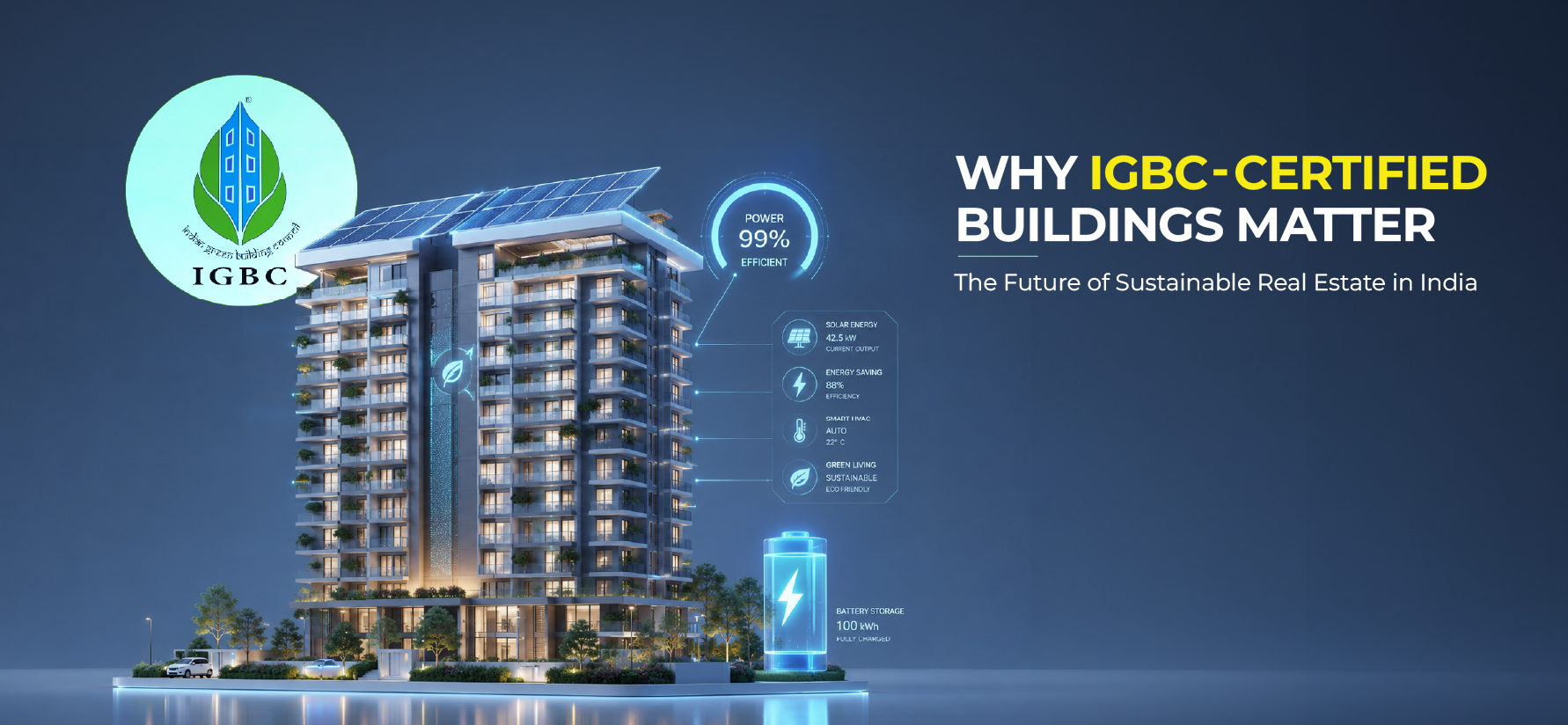
India is adding millions of square feet of new construction every year, but the real question is not how fast we are building, it is how wisely we are building. Spend any time talking to homebuyers today, and you will notice the conversation has quietly but unmistakably changed. The checklist has grown longer and more thoughtful. People want to know what their electricity bill will look like five years from now, whether the air inside the flat will be cleaner than the air outside, and whether the building they are putting their life savings into will still feel like a smart decision when they eventually decide to sell. These are not the questions of cautious buyers, they are the questions of informed ones.
Across India’s growing cities, sustainable real estate has stopped being a lifestyle preference reserved for the environmentally conscious and started becoming the benchmark by which serious buyers measure value. And the framework increasingly defining that benchmark is IGBC certification, India, a standard that has quietly grown into one of the most credible signals of quality and long-term thinking in the Indian property market.
What Is IGBC Certification
Most people have heard the term green building, but far fewer understand what actually goes into earning that label. The Indian Green Building Council, established in 2001 by the Confederation of Indian Industry, is the body that answers that question with rigour and accountability.
IGBC evaluates buildings across parameters that genuinely matter, including site planning, water efficiency, energy performance, use of sustainable materials, and indoor environment quality, before awarding one of four rating levels: Certified, Silver, Gold, or Platinum. IGBC extends its certification across residential homes, commercial offices, townships, factories, and healthcare facilities, making it one of the most comprehensive certification frameworks in the region.
According to IGBC, India now has a registered green footprint of over 15.90 billion square feet across more than 19,330 projects, with over 8,000 buildings fully certified and operational. That scale speaks for itself.
The Growing Demand for Green Buildings in India
The rise of green certified homes is not coincidental. It is what happens when environmental urgency, climbing utility costs, and a generation of genuinely informed buyers all arrive at the same conclusion at the same time. People are no longer willing to absorb the long-term cost of a building that was never designed with efficiency in mind, and that shift in thinking is now visible in the choices they are making.
Several forces are driving this momentum forward:
- Rising energy and water costs are making buyers far more conscious of what a home will actually cost to live in over time.
- Younger homebuyers are bringing sustainability into the conversation early, treating it as non-negotiable rather than a nice-to-have.
- Corporate occupiers are actively seeking energy efficient buildings to honour global ESG commitments and attract quality talent.
Government policy has strengthened this movement considerably, with the Energy Conservation Building Code, the Smart Cities Mission, and State-Level Floor Area Ratio incentives for IGBC-registered projects making green development a commercially sound decision for developers, not just an ethical one.
The Real Benefits of IGBC Green Homes
Most homebuyers think about what a property costs to buy. Fewer stop to think about what it costs to live in. That is precisely where IGBC green homes make their case most compellingly, not at the point of purchase, but in the years that follow it.
Living in a green certified home delivers advantages that compound quietly over time:
- Significantly lower energy and water bills each month, because these buildings are engineered from the ground up to consume far less than conventional construction ever could.
- Clean indoor air through better ventilation, non-toxic materials, and thoughtfully optimised natural lighting, all of which have a genuine and lasting effect on the health of everyone living inside.
- Fewer maintenance costs, as the materials and systems used in green construction are built to last and require far less upkeep over time.
- Stronger resale value and rental appeal, as more buyers and investors actively seek out certified sustainable properties over conventional alternatives.
Taken together, these are not marginal gains. For anyone thinking in decades rather than years, they represent a fundamentally different and better way to own property.
Cost vs Long-Term Savings: The Real Calculation
The upfront cost conversation around green-certified homes deserves more nuance than it usually gets. Yes, building or buying green comes with a modest premium. But a home is not a one-time transaction; it is a financial commitment that plays over decades, and that is precisely where the calculation begins to shift in favour of sustainability.
| Factor | Conventional Home | Green Certified Home |
|---|---|---|
| Construction Cost | Standard | Marginally Higher |
| Monthly Energy Bills | Higher | Significantly Lower |
| Water Bills | Standard | Significantly Lower |
| Maintenance Costs | Frequent and Unpredictable | Lower and More Predictable |
| Resale Value | Standard Appreciation | Stronger Appreciation |
| Regulatory Risk | Higher Over Time | Future-Proofed |
For investors, the argument is even more straightforward. A sustainable real estate asset that already meets tomorrow’s standards today does not need expensive upgrades down the line, does not struggle to find tenants as regulations tighten, and does not lose ground in a market that is increasingly rewarding buildings that were built with foresight.
Demand Trends in Sustainable Housing
The demand for eco-friendly real estate projects is accelerating across India, with metros leading the charge and tier two cities arriving at the same conclusions faster than anyone anticipated.
- Metro cities are witnessing a genuine and growing appetite for green certified homes, with sustainability moving firmly from aspiration to expectation among serious buyers.
- Premium developers are weaving eco-friendly buildings in India into the very core of their brand identity, because they understand that sustainability is no longer a differentiator, it is a baseline.
- Stricter government regulations on the horizon are turning early green adoption from a voluntary choice into a forward-thinking strategic advantage.
- Green township developments are finding an audience that is not just willing but eager, marking the arrival of sustainability as a mainstream residential category.
Why Investors Are Focusing on Green Projects
For investors who are paying close attention, the future of green buildings in India is not something to prepare for, it is something that is already arriving, quietly but unmistakably, in rental yields, absorption rates, and asset valuations across the country’s most active markets.
- Green developments are consistently outperforming conventional projects in appreciation, rewarding those who moved early.
- These are future ready assets, already pointing in the direction that tightening regulations and evolving buyer preferences are heading.
- Lower vacancy rates tell a straightforward story; tenants and buyers prefer certified green spaces, and that preference is only deepening.
- Sustainability compliance is already baked in, sparing investors the cost and disruption of bringing an asset up to standards it was never built to meet.
Conclusion
The homes that will hold their value, attract the best tenants, and age most gracefully are the ones being built with sustainability at their core today. Sustainable real estate in India has stopped being a forward-looking idea and become a present-tense reality, and buyers, developers, and investors who recognise that early are the ones who will benefit most. In a market growing faster than ever, IGBC certification in India has quietly become one of the most honest signals of quality, responsibility, and long-term thinking available to anyone making a property decision.
Explore eco-friendly projects
FAQ
2. Are green buildings more expensive?
Slightly more upfront, but the savings in bills and stronger resale value more than conventional projects.
3. Why are eco-friendly homes becoming popular in India?
Because informed buyers have realised that a home which costs less to run is worth more.
Thank you. Your comment will be visible after an approval.
Comments (0)
No comments found.Featured Articles

Proven Framework for High Velocity Launches
Recent Articles

Pune Homebuyer’s 2026 Shortlist: How to Choose Between Wakad, Baner, Hinjawadi and Tathawade

From Property Search to Shortlisting: How a Real Estate Platform Can Simplify Buying a Home in India

Mumbai 3.0: How Infrastructure Is Redrawing Mumbai’s Real Estate Map

The Smarter Way to Find Your Next Home: Using a Real Estate Platform to Compare Projects, Locations and Prices

What Is IFMS in Real Estate? Meaning, Benefits, Charges & What Homebuyers Should Know
Add your comment