Categories
Uncategorized

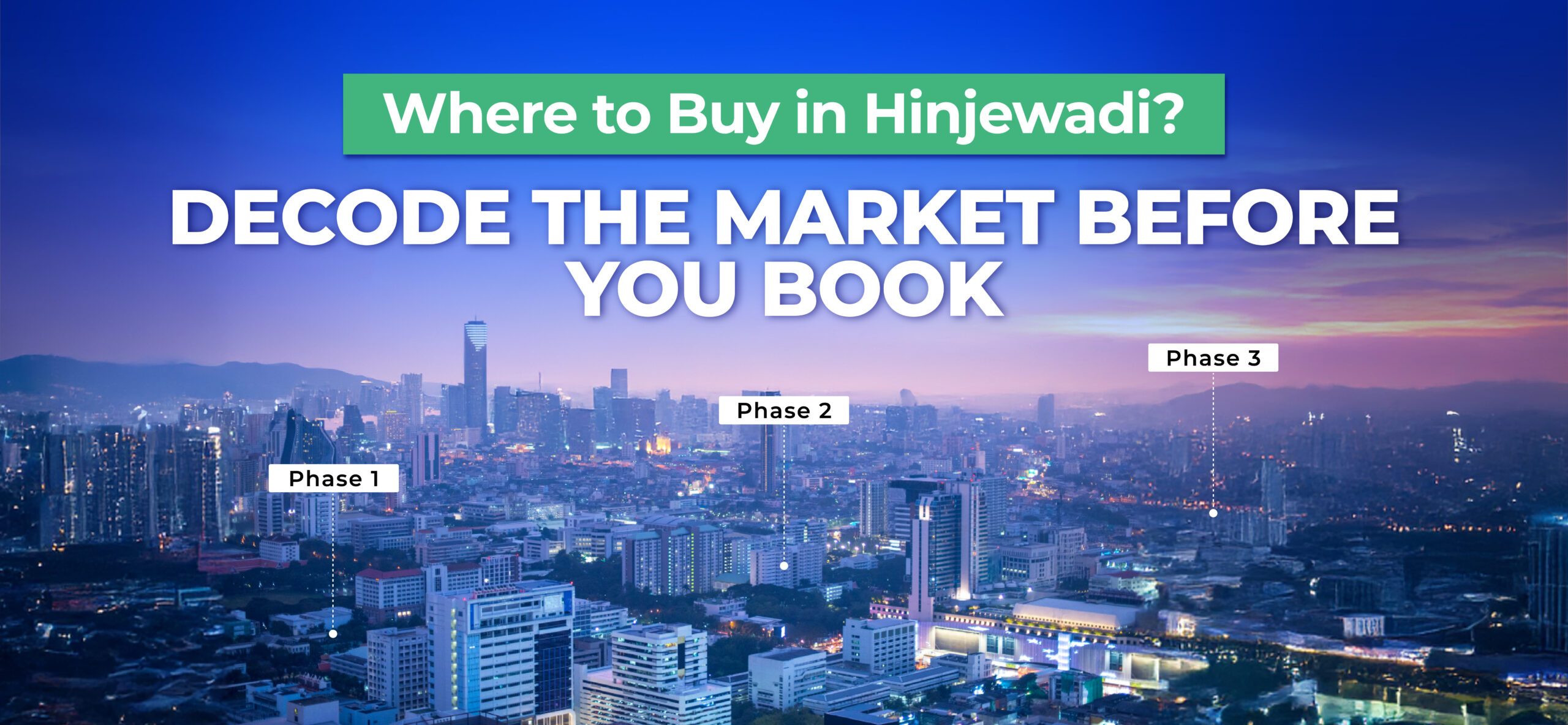
Where to Buy in Hinjewadi? Decode the Market Before You Book

For most homebuyers and investors in Pune, Hinjewadi sits high on the shortlist. And it makes complete sense, it’s a major IT hub, metro connectivity is nearly here, and rental demand hasn’t slowed down.

But Hinjewadi isn’t one single market. It’s split into three very different zones, Phase 1, Phase 2, and Phase 3. Each comes with its own price points, buyer profiles, risks, and potential returns.

Whether you’re buying to live or rent, this guide breaks down what to expect in each phase of Hinjewadi, and how to choose what’s right for you.

Why Buying in Hinjewadi Still Makes Sense in 2025

If you’re looking at property investment in Hinjewadi, it’s still among the most attractive micro-markets in the Pune real estate ecosystem, and not just for IT professionals.

Here’s why the momentum is far from over:

  • Property prices in Hinjewadi have grown 15% YoY, with the average now around ₹8,200/sq ft.
  • Rental demand has jumped 57% over 3 years. A 2 BHK once rented at ₹17,000 now fetches ₹28,000.
  • Pune Metro Line 3 (Hinjewadi–Shivajinagar) is 95% ready and expected to go live by March 2026.
  • Expected PCMC governance will bring in improved infrastructure, road maintenance, water supply, and more.

Yet, many buyers mistakenly treat Hinjewadi as a single market. In reality, it comprises three distinct phases, each with its own pros, cons, and investment logic.

Hinjewadi Phase-Wise Breakdown

Phase 1: Premium, Connected, Competitive

Competes With: Wakad, Balewadi
Price Band: ₹9,000–₹11,500/sq ft
Best For: Buyers seeking established areas, quick possession, or solid rental potential

What You’ll Notice:

  • Feels like a polished city: wide roads, established schools, IT campuses (Infosys, Wipro)
  • Many projects are either ready-to-move or near completion

Why It Works:

  • Walk-to-work proximity for IT professionals
  • High rental yield and resale demand
  • Near metro corridors and expressways

What to Watch Out For:

  • High ticket sizes (₹1.1–1.4 Cr for a well-placed 3 BHK)
  • Stiff competition with Wakad and Balewadi at similar price points
  • Returns are steady, not explosive — best for low-risk investors in Pune

Phase 2: The Balanced Buy

Competes With: Tathawade
Price Band: ₹7500–₹9,800/sq ft
Best For: First-time buyers, IT couples, and investors seeking growth + affordability

What You’ll Notice:

  • More compact formats like 2 BHKs and smaller 3 BHKs
  • Quieter than Phase 1 but more developed than Phase 3

Why It Works:

  • Good mix of rental and end-use projects
  • Metro and road connectivity are improving
  • Multiple township-style developments attracting families

What to Watch Out For:

  • Uneven project quality – site visits essential
  • Social infrastructure like schools and clinics still catching up
  • Compare carefully with Tathawade for better value

Phase 3: The Long-Term Play

Competes With: Punawale
Price Band: ₹6,200–₹7,900/sq ft
Best For: Price-conscious buyers, long-term investors, and second-home seekers

What You’ll Notice:

  • Under-construction zones dominate; civic infrastructure is evolving
  • Several new launches with strong amenities and phased development

Why It Works:

  • Lower entry = better ROI prospects
  • Strong rental yields for 2 BHKs
  • Best upside post-2026 as metro and roads complete

What to Watch Out For:

  • You’ll need a car; public transport is still limited
  • Near-term lifestyle trade-offs (noise, dust, access)
  • Patience needed for capital appreciation; ideal for those with 3–5 year horizon

What’s Driving Real Estate Growth in Hinjewadi?

  • Hinjewadi houses nearly 40% of Pune’s IT job market, driving housing and rental demand.
  • Pune Metro is a game-changer: connectivity to Shivajinagar, PCMC, and Pune city centre will boost values.
  • With ongoing PCMC integration, better governance and infrastructure development is expected across phases.
  • Rental yields are high across phases, particularly near RGIP, Phase 1, and Marunji.

Final Take: Which Hinjewadi Phase Fits You Best?

Ask yourself:

  • Want livability now? → Phase 1: polished, reliable, and rental-ready
  • Want a smart price-quality balance? → Phase 2: still evolving, but demand is hot
  • Want future ROI? → Phase 3: budget-friendly with high upside after 2026

Every phase has a use case. The key is aligning your lifestyle goals or property ROI expectations with the right location.
Categories
Uncategorized

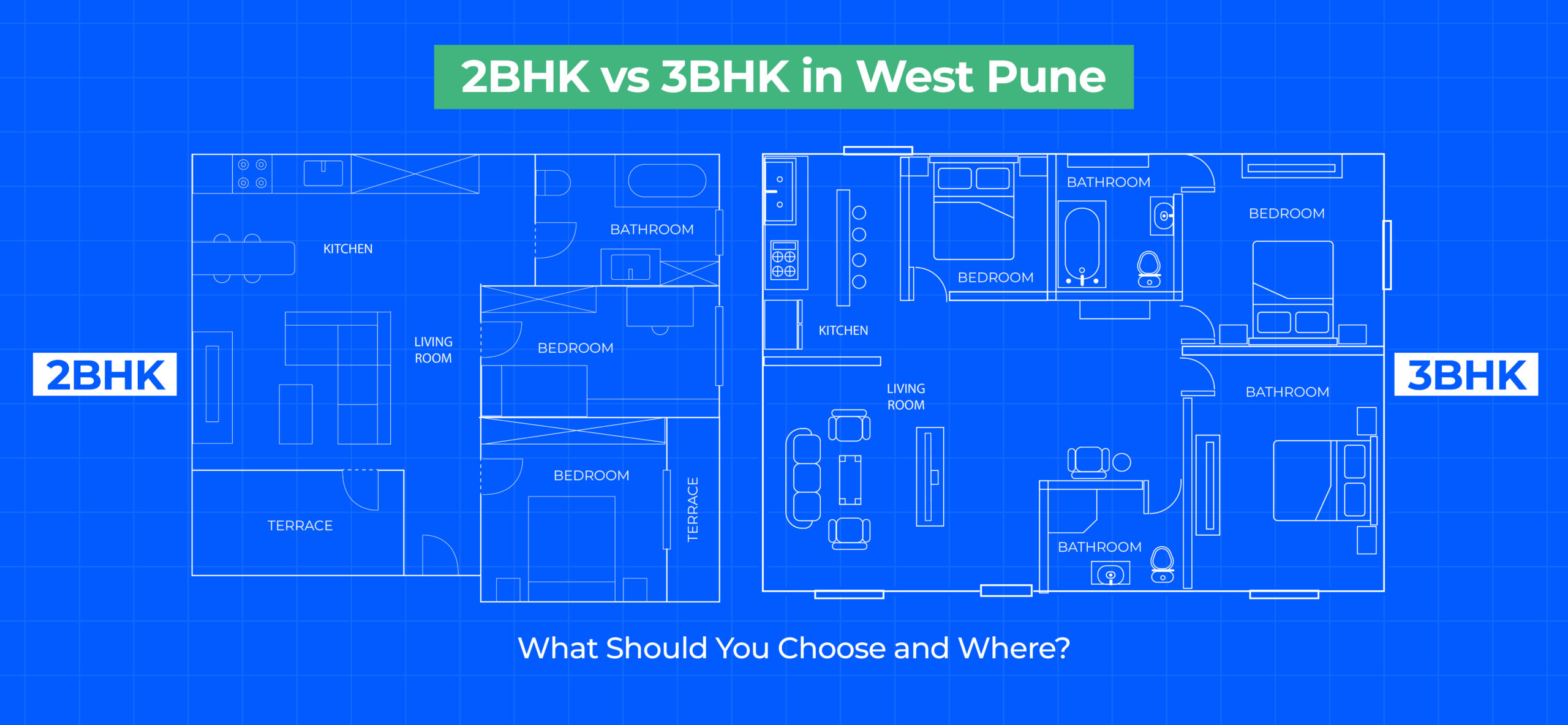
2BHK vs 3BHK in West Pune: What Should You Choose and Where?

Pune’s West corridor is one of the city’s most dynamic real estate belts. With IT hubs, expressways, and newer residential projects in Pune expanding, the lines between micro-markets are blurring. Whether you’re a newly married couple, a growing family, or an upgrader looking for a long-term asset, understanding the west market before making an investment can helpful in the long run. When it comes to choosing between a 2BHK and 3BHK in West Pune, the decision often rests on a trade-off between space and spend. If you’ve been asking yourself, “Can I afford more room without compromising on location or lifestyle?” this guide is for you.

If You’re Budget-Conscious but Want Centrality: Look at 2BHKs Under ₹80L

Ideal Pockets: Aundh Ravet BRTS Road & Hinjewadi Phase 2 If staying near the city’s buzz and IT hubs matters, 2BHK flats in Hinjewadi Phase 2 and Aundh Ravet BRTS Road offer compact yet connected living. These areas are served by the BRTS network, upcoming Pune Metro Line 3, and top schools and hospitals, making them practical for IT employees, families, and first-time buyers.
  • Why it works: You get proximity to Baner and Hinjewadi without the premium tag.
  • What to expect: Most 2BHK flats here offer 700–800 sq.ft carpet area, priced between ₹72L–₹80L all-inclusive.
  • What to watch: Inventory moves fast under ₹80L, look out for new project launches or limited-period offers.

If You’re Seeking Extra Room Without Crossing ₹1 Cr: Explore Punawale

Best Bet: Spacious 3BHKs with Club-Class Amenities 3BHK flats in Punawale have become the smart value choice in West Pune real estate. While Baner and Balewadi get costlier, Punawale offers 3BHK homes with large layouts and modern amenities, all within mid-income budgets.
  • Who it suits: Upgraders from 2BHKs, nuclear families, or remote-working professionals.
  • Current Pricing: ₹88L–₹1.05 Cr for 900–1100 sq.ft carpet.
  • Why it’s smart: You get a full 3BHK lifestyle, balcony, home office, kid’s room, and club amenities at the price of a mid-range 2BHK in Baner.
Connectivity Highlights: Punawale is 10 minutes from Wakad, well-linked to the Mumbai–Pune Expressway, and close to the Metro Line 3 corridor, boosting both convenience and property value. Keywords: 3BHK flats in Punawale, 3BHK under ₹1 Cr Pune, new projects in Punawale, value homes Pune.

If You’re Open to Premium Budgets: Balewadi & Emerging Tathawade Pockets

Budget: ₹1.2 Cr – ₹1.6 Cr Balewadi remains one of Pune’s top-performing premium real estate micro-markets. With high-end finishes, resale traction, and access to top schools and offices, 3BHK flats in Balewadi offer both lifestyle and investment value. But if you want something newer, the Sai Millenium pocket in Tathawade is fast emerging. This stretch — located between Aundh Ravet BRTS Road and the Pune–Bangalore Highway — is a sweet spot for those who want space, connectivity, and modern living.
  • Why it matters: It’s among the few areas offering 2, 3, and even 4BHK configurations across different ticket sizes — ideal for joint families or co-buyers.
  • What’s coming: Metro reach from Phase 3, better social infrastructure, and upcoming MahaRERA-approved projects from reputed developers.
Pricing:
  • 3BHK Balewadi: ₹1.45 Cr onwards
  • Tathawade pocket: ₹1.2–₹1.6 Cr with efficient layouts
Keywords: 3BHK Balewadi Pune, 3BHK flats in Tathawade, premium flats Pune, new projects Pune West.

Beyond the BHK Count: Key Parameters to Compare

Parameter Why It Matters
Commute Time Closer to work = lower long-term fatigue
Resale & Rental Appeal Layout efficiency + location = better ROI
Loan Eligibility 3BHKs may test your sanctioned limits
Family Size Growth Extra room pays off as your family grows
Possession Timelines Some 3BHKs are available quicker than 2BHKs
  Keywords: home buyers Pune, property Pune, flats in Pune, Pune realty.

What’s New in West Pune: Infrastructure Boosts That Add Value

Metro Line 3 Is Almost Ready The Hinjawadi–Shivajinagar Metro is 90% complete (as per Times of India) and expected by early 2026. It connects key zones like Baner, Balewadi, and Hinjawadi, significantly cutting commute time. Ring Road Will Decongest Traffic The upcoming Pune Ring Road will connect outer zones, improving access from Punawale, Wakad, and Aundh-Ravet to highways and IT parks — a major plus for daily commuters. Smart City Upgrades Underway From new parks and LED lighting to cleaner roads, the Smart City Pune program is improving livability across major corridors. Developers Focus on Growth Zones Builders are actively launching new projects in Tathawade, Punawale, and Balewadi Annex, backed by modern amenities and flexible payment plans. Government Push on Infrastructure Over 20 large projects are being fast-tracked, including metro extensions and new roads further boosting Pune housing and real estate investment potential. Keywords: Pune Metro, Ring Road Pune, Smart City Pune, Pune projects, Pune development.

Why This Matters When You Buy

Homes near upcoming infrastructure — like metro routes or new highways, see faster value appreciation. When comparing 2BHK vs 3BHK in Pune, factor in upcoming civic and transit upgrades; they’ll impact both your daily life and long-term ROI.

Let’s Connect

Whether you’re comparing Punawale vs Tathawade or debating between a 2BHK and 3BHK, BeyondWalls helps you get clarity fast. Access verified and MahaRERA-tagged projects Price transparency across all major developers Layout explainers, EMI support & on-ground walkthroughs Presales guidance that positions, not pressures Let’s connect and find your best-fit home in West Pune.
Categories
Uncategorized

Punawale Real Estate 2025: The Data Homebuyers & Investors Should Not Ignore

1. Where Punawale sits in the Pune market

  • Micro-market: Punawale is part of West Pune/PCMC alongside Hinjewadi–Wakad–Tathawade–Baner. In H1-2025, West Pune accounted for 43% of new launches and 40% of sales citywide; its unsold stock was ~20,976 units with Quarters-to-Sell (QTS) ~3.8, indicating healthy absorption.
  • Local price reference: Hindustan Times (citing Square Yards) pegs Punawale’s average asking price ~₹9,666/sq ft (context for today’s ticket sizes).
  • Infra backdrop: The Hinjewadi–Shivajinagar Metro (Line-3) has already completed successful trial runs and is now targeted to start operations by Mar-2026; West Pune corridors near the alignment (Hinjewadi–Wakad–Balewadi–Baner) have been leading demand and price gains.
  • Civic works / bottlenecks: PCMC has taken up multiple road projects in Punawale–Wakad–Ravet–Tathawade to ease congestion; meanwhile, residents and TOI reports highlight heavy gridlock at Punawale underpasses and intermittent water-quality issues—important due-diligence points.
    This pointers in the intro needs to be framed as there are issues but they are going to be resolved with the infrastructure upgrades that have been taken on by the government.

2. Demand by ticket size

(Using Knight Frank’s H1-2025 city cut; Punawale tracks the West Pune mix.)

Share of sales by budget (H1-2025):

  • < ₹50 L: 28% (down from 34% in H1-2024)
  • ₹50 L–₹1 Cr: 47% (up from 46%)
  • ₹1–2 Cr: 20% (up from 16%)
  • ₹2–5 Cr: 5% (≈4% earlier)
  • >₹5 Cr: ~0%

  • Interpretation: the market is skewing up—bigger share in ₹50 L–₹1 Cr and ₹1–2 Cr; the 0-₹50 L slice is shrinking. Knight Frank

Ticket-size “health” (unsold inventory & QTS, H1-2025):

  • ₹50 L–₹1 Cr: Unsold 9,733 (+46% YoY), QTS 1.6 → fast moving despite higher inventory.
  • ₹1–2 Cr: Unsold 13,886 (+48% YoY), QTS 6.2 → slower than mid, still liquid
  • <₹50 L: Unsold 22,320 (–12% YoY), QTS 5.3 → steady, thinning stock.
  • ₹2–5 Cr: Unsold 2,658 (+97% YoY), QTS 5.0 → niche, slower.
  • Ultra (₹2–5Cr+): Tiny base; QTS 21.8 at ₹2–5Cr+ tail (thin demand). Knight Frank

So, for Punawale buyers/investors: mid-market ₹60–90 L (2BHK) and up-mid ₹90 L–₹1.5 Cr (larger 2/3BHK) are the most liquid bands today in West Pune.

3. Unsold inventory & absorption – Pune city trend check

  • Knight Frank (H1-2025): Pune’s total unsold rose 14% YoY to ~48,646 units; QTS ~3.7—still a healthy sell-through benchmark. Knight Frank
  • ANAROCK (Q2-CY2025): Pune simultaneously shows best YoY decline in unsold stock (-15%) among top cities (different cut/definitions). Takeaway: despite new supply, absorption is robust, and overhang stays manageable.

4. Pricing & rents – what’s moving in West Pune

  • West Pune price momentum (12-month, H1-2025): Wakad +18%, Hinjewadi +7%, Baner +7%, Aundh +2%—the spillover supports Punawale values. Knight Frank
  • Citywide rent backdrop: Rents in Pune jumped ~20–25% over 3 years on infra & demand; national media also flags double-digit rent surges across metros with improving yields—Pune among leaders.

5. Registrations & macro demand signals

  • Property registrations: Pune clocked ~1.16 lakh registrations in H1-2025 (+16% YoY) with ₹4,328 cr stamp duty (+19% YoY)—a four-year high.
  • NHB RESIDEX (official price index): Pune +6% YoY in Apr–Jun 2025, confirming continued price appreciation. NHB
  • IT/office linkage: 2025 saw strong GCC-led office leasing (city), a structural support for West Pune housing demand.

6. What this means for homebuyers and investors?

If you’re a homebuyer:

  • The ₹60–90 L band (compact 2BHK) is the sweet spot for Punawale with fast absorption citywide; ₹90 L–₹1.5 Cr 2/3BHKs also see steady demand but with higher QTS. Expect ongoing price firmness given West Pune’s sale share and infra pipeline. Knight Frank

If you’re an investor:

  • West Pune’s rent growth and office demand support stable leasing; yields in Pune have been trending up as rents outpace capital values lately. Focus near arterial connectors to Hinjewadi/Wakad and future Metro access (even if last-mile from Punawale), but underwrite traffic/water risks and O&M quality

Conclusion: Quick locality checklist (how to shortlist projects)

  1. Ticket size: Target ₹60–90 L (quickest moving) or ₹90 L–₹1.5 Cr (bigger units; slower but stable). Knight Frank
  2. Micro-market comps: Use Wakad/Hinjewadi/ price/rent as comps (Wakad led 12-mo price rise). Knight Frank
  3. Supply risk: Prefer projects with visible construction and check RERA progress and registration trends as validation of demand. City registration momentum in 2025 is strong.
Categories
Uncategorized

How Consumers Are Driving Up Real Estate Prices for Themselves

It’s time homebuyers take a hard look at their own buying behaviour.

While we often blame developers, brokers, or market conditions for rising home prices, the uncomfortable truth is this — consumers themselves are playing a big part in driving up property prices.


The Problem: Buying Without Data, Driven by Hype

Most homebuyers today don’t do enough research. They’re driven by buzz, influencer chatter, or large-brand advertising — not by numbers. Instead of analysing price loading, construction timelines, or inventory stage, many buyers rush into bookings simply because a project is “trending.”

This behaviour has a cascading effect: developers see that people are willing to pay inflated rates, and the next project in the same area automatically launches higher. Over time, that hype premium becomes the new normal.


Case in Point: Wakad, Vinode Vasti, and Indira Areas

Take the western Pune micro-markets of Wakad, Vinode Vasti, and Indira. Over the last year, all the major ongoing or newly launched projects there have been sold at approximately:

  • ₹7,200–₹7,300 per sq.ft. (Saleable) for premium developments with ~40% loading
  • ₹6,800–₹7,000 per sq.ft. for 2BHK configurations

Now compare this with a new pre-launch — let’s say Kohinoor, a smaller 9-acre project still two years away from possession.

Despite being at an early stage, Kohinoor is demanding around ₹8,500 per sq.ft. (saleable) — nearly ₹1,000–₹1,200 higher than ongoing premium projects already nearing completion.


What’s Wrong With That?

At first glance, this may seem like just another pricing strategy. But here’s what’s actually happening:

1.Heavy Distribution Margins:

To justify such a high pre-launch rate, developers often push large margins through distribution channels, inflating the perceived “market rate.”

2.Delayed Delivery = Hidden Cost:

Kohinoor, for example, will deliver 2 years later than ongoing projects. Buyers will end up paying ₹15–₹20 lakhs more in EMIs over that period — for a flat that isn’t even ready yet.

3.Market Price Reset:

Once one developer successfully sells units at ₹8,500, others in the same micro-market start revising their prices upward — even if their product or stage doesn’t justify it.

In short, one premature buying decision can trigger an entire wave of price escalation.


The Domino Effect on Other Developers

Let’s look at the ripple impact.

Projects like Central Avenue, Treasure Troves, and Sukhwani Skylines — all of which were selling at healthy, justified rates till last month — will now be tempted to increase their prices once they see consumer traction at ₹8,500.

And that’s how buyers end up collectively inflating their own market.


What You Can Do Differently

1.Resist the Hype:

Don’t get swayed by “pre-launch rush” or “limited inventory” calls. These are marketing tactics — not market truths.

2.Compare Projects on Facts, Not Names:

If a project offers possession in 2 years and costs ₹1,000 more per sq.ft., you’re effectively paying ₹15–₹20 lakhs extra.
There are ready or near-ready options at ₹7,000 per sq.ft. — choose data, not noise.

3.Understand Loading, Carpet Area, and Total Cost:

Always evaluate the price per carpet area, not the sellable. That’s the only number that truly reflects value.

4.Check Legalities & Approvals:

A slightly lower-priced project with clean approvals and early possession is far better than a “branded” pre-launch that’s all promise and no delivery.

Final Word: Don’t Drive Prices Against Yourself

The power to keep real estate prices rational lies with buyers, not just developers. If consumers start demanding data transparency, evaluating based on fundamentals, and resisting hype-driven launches, the market will correct itself faster than any policy change can manage.

So before you book your next home — take a step back, check the numbers, and make sure you’re not driving up the prices for yourself.