Categories
PropTech Real Estate Marketing Real Estate Sales

Designing Small Homes with Confidence: When Bold Choices Work Better Than Minimalism

Let’s be honest most of us living in the city have been told the same thing: “Keep the walls white, don’t buy big furniture, and if you even think about a dark rug, your apartment will feel like a shoebox.” We’ve been conditioned to think that small home design ideas must always equal “safe” minimalism. But here’s a secret: playing it too safe can actually make a home feel bland and, ironically, smaller because there’s nothing for the eye to look at.

You don’t need a massive bungalow to have a massive style. In fact, lean-in bold interior design can turn a cramped 1BHK into a curated masterpiece. It’s not about cluttering; it’s about character. Let’s talk about how to break the “rules” and make your compact home feel like a high-end retreat.

Why “Boring” Isn’t the Only Way to Save Space

The biggest myth in interior design is that empty space equals “roomy” space. In reality, a neutral-on-neutral room can feel flat and lifeless. When everything is the same beige or off-white, your eyes don’t have any landmarks to follow, which can actually make a room feel boxy.

By introducing bold interior design elements like a deep teal wall or a chunky velvet sofa you’re creating depth. Visual interest pulls the eye toward specific points, making the boundaries of the room feel less restrictive. Intentional boldness looks premium; it says, “I chose this,” whereas an empty room often says, “I didn’t know what to do.” When you commit to a style, your home feels like a boutique hotel rather than just a place where you store your stuff.

Master the Art of Color, Texture, and Layout

In Indian urban homes, we often deal with weirdly shaped rooms or open-plan layouts where the living room, dining area, and kitchen all blur into one. This is where “Color Blocking” becomes your best friend. Instead of painting the whole house one color, use a bold shade on just one wall to define a zone. For example, a charcoal grey wall behind your TV unit can instantly signal “This is the lounge,” while the rest of the space stays airy.

Don’t forget texture! A small home can feel “cold” if everything is smooth plastic or laminate. Mix it up. Pair a sleek marble-top coffee table with a chunky jute rug or a soft fabric sofa. In a 2BHK, these layers of texture add a sense of luxury that makes the space feel intentional. Think of it dressing a plain outfit is fine, but adding a leather jacket and a silk scarf makes it an “ensemble.”

Smart Furniture: Quality Over Quantity

The fastest way to make a small home feel cluttered is to fill it with lots of tiny furniture. It sounds counterintuitive, but one large, comfortable sofa often looks better and feels more spacious than four small, spindly chairs. This is the “fewer but better” rule of compact apartment styling.

For urban dwellers, multi-functional is the name of the game. Look for:

  • Storage Beds: Because let’s face it, we all have suitcases and winter blankets that need a home.
  • Wall-Mounted Units: Floating desks or TV consoles keep the floor visible. The more floor you can see, the bigger the room feels!
  • Foldable Tables: A dining table that drops down when not in use is a lifesaver for 1BHK apartments.

When your furniture works double duty, you don’t need as many pieces, which leaves your walkways clear and your mind calm.

Lighting: The Secret Space-Maker

If you only have one “tube light” in the middle of the room, you’re doing your home a disservice. Lighting can literally change the dimensions of a room. To make a space feel huge, you need Layered Lighting.

  • Ambient: Your main overhead light.
  • Task: A lamp on your desk or under-cabinet lights in the kitchen.
  • Accent: A warm LED strip behind a mirror or a spotlight on a piece of art.

Using mirrors is the oldest trick in the book, but for a reason—they work! Place a large mirror opposite a window to bounce natural light into the dark corners. If you have low ceilings, use “up-lighting” (floor lamps that point upward) to trick the eye into thinking the walls are taller than they are.

Styling Tips for the Modern Urbanite

Styling a 1 or 2 BHK is all about the “Hero Element.” Instead of a “gallery wall” with fifteen tiny frames (which can look messy), go for one massive, bold piece of art. It creates a singular focus point that anchors the room.

Indoor plants are another great way to add life without adding “bulk.” A tall Monstera in a corner or some hanging Pothos can bring in a splash of natural green that softens the hard edges of apartment living. And remember: one bold rug can tie an entire room together. If your walls are neutral, go wild with a patterned rug. It’s like an anchor for your furniture, making everything feel tucked in and organized.


Categories
PropTech Real Estate Marketing Real Estate Sales

The Great Move: Why Everyone is Looking Beyond the Metros

If you’ve spent any time lately scrolling through real estate apps in cities like Mumbai or Bengaluru, you’ve probably felt that familiar sting of “sticker shock.” You see a tiny apartment, look at the price tag, and wonder if you’re buying a home or a private island. It’s exhausting.

But lately, the conversation has shifted. At weddings, family dinners, or even on LinkedIn, people are talking about Jaipur, Indore, Lucknow, or Coimbatore. There’s a massive movement happening where the “Indian Dream” is moving out of the crowded metros and into smaller, more breathable cities.

Why now? Because for the first time, housing finance growth in India has actually caught up with our ambitions. It’s no longer a struggle to get a loan if you aren’t in a Tier 1 city. Suddenly, affordability and accessibility are finally hanging out in the same room, making the dream of owning a home feel… well, actually doable.

Banks are Finally Coming to You

For a long time, trying to get a home loan in a non-metro city felt like you were asking for a massive favor. The paperwork was endless, and the “big banks” didn’t seem to care about anything outside the major hubs.

That’s completely changed. Today, banks and housing finance companies (HFCs) are racing to set up shop in Tier 2 and 3 markets. They’ve realized that the “real” India lives here, and the demand is through the roof. Thanks to digital apps and Video KYC, you can get your loan processed while sitting in a cafe in Dehradun. Lenders aren’t just looking at your salary slip anymore; they’re looking at the local growth of your city. They see lower risks and a huge crowd of honest, hard-working buyers. It’s a win-win.

More House, Less Stress

The math of emerging real estate cities is actually pretty beautiful. In a metro, you’re basically paying for the “postcode.” You might spend your entire life’s savings on a 2BHK where you can hear your neighbor sneeze.

In a Tier 2 city, that same amount of money or often much less can get you a spacious 3BHK or even an independent villa with a little garden.

Lower EMIs: Because the total price is lower, your monthly commitment won’t eat up 60% of your salary.

Higher Eligibility: Banks are more likely to say “yes” when the loan amount is sensible compared to your income.

Better Tenure: You can spread the loan over 20 or 30 years, keeping your lifestyle intact while you build equity.

For millennials who want to travel, eat out, and actually live life, this balance is a no-brainer.

The Government Has Your Back

It’s not just about money; it’s about infrastructure. You’ve probably noticed the new highways, the cleaner airports, and the metro rails popping up in cities like Nagpur or Kochi. The government is pouring money into making these cities “livable.”

They’ve also introduced several incentives for first-time buyers. While we won’t get bogged down in the fine print of every scheme, the general direction is clear: the government wants you to buy your first home in these growth hubs. Between tax breaks and interest subsidies, they’ve made it so that the “entry barrier” is lower than it’s ever been. When the government invests in a city’s roads and water, your property value naturally goes up. It’s like getting a free upgrade on your investment.

Lifestyle: The “Reverse Migration” is Real

Remember when everyone had to move to the big city for a “good life”? Those days are fading. With remote work and hybrid offices becoming the norm, people are asking themselves:

Living in a Tier 2 or 3 city today doesn’t mean compromising. You’ve got the same malls, the same pizza delivery, and better schools, but with half the traffic and way less pollution. Millennials are choosing space, mental peace, and long-term stability. They want a home where they can actually breathe, have a home office, and maybe even a spot for a dog. It’s about a “lifestyle upgrade” that the big metros just can’t offer anymore at a reasonable price.

Investing in the “Next Big Thing”

If you’re looking at this from an investment perspective, Tier 2 Tier 3 housing demand is where the real growth is. In a metro, property prices are already at the ceiling. In an emerging city, you’re getting in on the ground floor.

The potential for your property value to double in the next few years is much higher in a city that’s just starting its growth spurt. Of course, be smart to check the developer’s reputation and make sure the project has all its legal clearances. But generally speaking, the “early birds” in these markets are going to see some very happy returns.

Categories
Real Estate Sales

Understanding Consumer Psychology and Pricing Elasticity in Real Estate

Real estate majorly revolves around the location of the property, and pricing has generally been the key factor. However, it’s crucial to consider another significant aspect, which is consumer psychology. A detailed understanding of the consumer psychology influencing pricing elasticity is essential, as real estate reflects the overall health of the economy.

For example, in 2022, the demand for 3 BHK homes was high because the economy, especially the tech sector, was thriving. Young professionals, around 28 years old, earning between 30 to 40 lakhs were investing a major part of their income in homes, cars, and travel. Homes were a priority, symbolizing status and stability. Fast forward to 2023, the demand for 3 BHKs dropped by more than half. Despite still earning 40 lakhs, individuals became cautious due to news of layoffs and economic uncertainty. Understanding the consumer’s thought process is now crucial when planning or pricing projects.

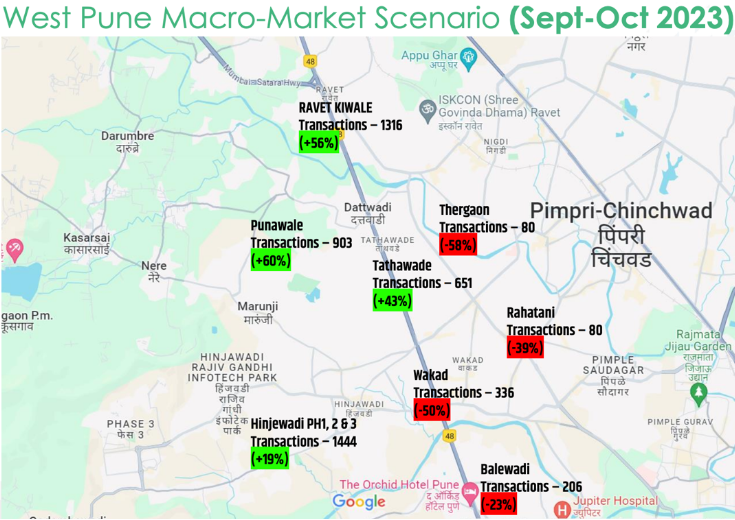
To illustrate this, let’s look at PCMC and the surrounding localities of PMC, representing West Pune’s real estate trajectory. Analyzing registrations from Sep-Oct 2022 and comparing them with 2023, we observe a significant decline in real estate sales in previously popular areas like Wakad, Balewadi, Rahatni, and Thergaon. In contrast, Tathwade, Punawale, and Ravet have experienced an upswing, possibly influenced by a mix of inventory and increasing prices. Interestingly, Hinjewadi has defied the trend, with volumes increasing despite rising prices. This data emphasizes the need to adapt strategies based on consumer behavior and market dynamics.

Real Estate Project-Wise Analysis: Key Metrics and Trends

Project Transaction (Sept-Oct ’23) Project Features/Sales Strategy Average APR Micro Market
GK Aarcon 369 Affordable Segment, Nearing Possession, Compact Homes 5100 Punawale
Kolte Patil – Life Republic 174 Smaller Sizes, Township Experience, Higher AOP & Marketing Costs 5300 Marunji
Unique K Town 84 Majority 2 BHKs 5132 Kiwale
Gini Vivante 77 Majority 2 BHKs & Compact 3 BHKs, 17 Acre Township 5173 Kiwale
Mangalam Melizma 69 Majority 2 BHKs & Compact 3 BHKs & Local AOPs 4710 Kiwale
Vivanta Yashada Windsong 61 Mid to Premium Segment, yet Majority 2 BHKs Sold 5950 Ravet
Jhamtani Ace Atmosphere 56 Mid to Premium Segment, yet Majority 2 BHKs Sold 5775 Aundh-Ravet BRTS Road
Kolte Patil Little Earth 53 Only 2 BHKs Sold with few compact 3 BHKs, Township Style Layout, Higher AOP & Marketing Costs 5012 Mamurdi
Shri Om Manglam Chaitanya 52 Only 2 BHKs Sold 4733 Kiwale
Jhamtani Ace Abode 45 Mid to Premium Segment, yet Majority 2 BHKs Sold 4790 Kiwale
Kohinoor Westview Reserve 44 Higher AOP, Higher Marketing Costs, Celeb Tie-Ups 6170 Tathawade
Lodha Hinjewadi 44 Brand Pull, AOP, & Operational Costs are higher 7600 Hinjewadi PH1
VTP Earth 1 44 Higher AOP & Marketing Cost, High Marketing Cost 7200 Mahalunge
Sai Bliss (Punavale) 41 Affordable, Nearing Possession 5100 Punawale
Kohinoor Coral 39 Affordable & Nearing or Ready, Small Carpet Sizes 5400 Hinjewadi PH3
Pebbles Greenfields 37 Higher AOPs & Sizes a= controlled of 2 & 3 BHKs 6750 Tathawade
Aishwaryam Insignia 35 Affordable & Small Carpet Sizes 5300 Aishwaryam Insignia
Kohinoor Famville 32 Higher AOP, Higher Marketing Costs, Celeb Tie-Ups, Etc 5780 Hinjewadi PH2
Nirman Astropolis 32 Premium Segment 6600 Aundh-Ravet BRTS Road
Mahindra Happinest Tathawade 30 National Brand, Smaller Sizes, 1 & 2 BHK, 470-680 sq.ft 6126 Tathawade
Pegasus Megapolis Mystic 27 Township Layout, Larger 2 & 3 BHKs, NRI Tie-Ups, Higher AOPs & Referrals 5821 Hinjewadi PH3
Rohan Nidita 26 Hinjewadi PH1, Brokerage driven, controlled marketing cost 6800 Hinjewadi PH1
Tulip Infinity Avana 24 2, 3 & 4 BHKs. Optimal sizing larger layout, high brokerage, good referral 7300 Aundh-Ravet BRTS Road
Shapoorji Pallonji Sensorium 23 Brand Pull, AOP, & Marketing Costs are higher 7490 Maan Road
Mihir Amara 22 Location Pricing advantage, spillover from Baner and Balewadi 6770 Wakad
Roshan Milestone 21 Affordable Segment with Compact Homes 4000 Punawale
Unique K Shire 21 Optimal Sizes & Larger layout gets Wakad spillover 5700 Punawale
Pegasus Megapolis Serenity 20 Only Compact 2 BHKs sold, Township Layout, Higher AOPs 5530 Hinjewadi PH3
Pharande Puneville 20 Large Layout & Pricing optimal, gets Wakad spillover due to location 5600 Punawale
Shree Sonigara Signature Ritz 20 Large Carpets, Higher brokerages 7150 Aundh-Ravet BRTS Road
Pride Purple Park Titan 19 Brand, Larger planned development, Higher Brokerages 6770 Hinjewadi PH1
Krisala 41 Zillenia 18 Decent 2 BHK & Compact 3 BHK, Higher Marketing Costs & AOPs 5216 Punawale

Types of Buyers and Location Preferences

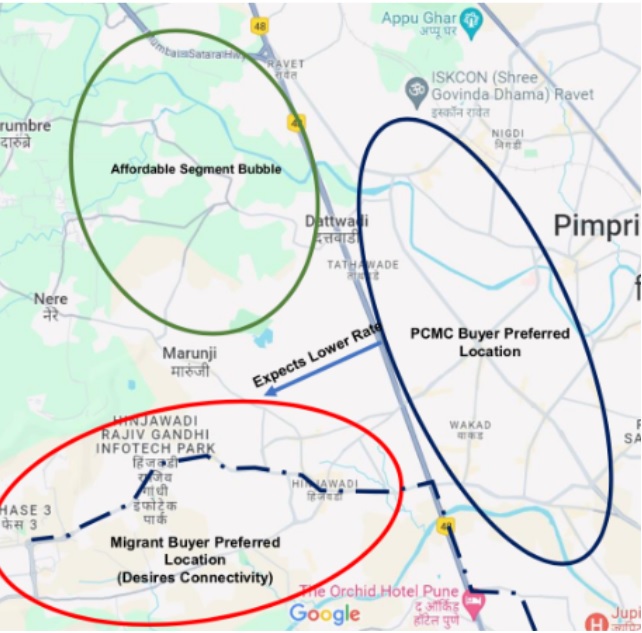
  1. PCMC Buyers Preferred Locations:

    • PCMC Buyers preferred location Encompass crossing a highway.
    • Wakad
    • Ravet
    • Mamurdi

    Migrant Buyers Preferred Locations:

    • Hinjewadi
  2. Affordable Segment Bubble:

    • Punawale
    • Tathawade
    • Ravet

Factors Influencing Consumer’s Buying Preferences

  1. Affordability

    The shift in demand towards Punawale, Tathawade, and Ravet indicates a preference for more affordable housing options. Consumers are becoming increasingly conscious of their budgets, especially in times of economic uncertainty.

  2. Inventory Mix

    Locations experiencing an upswing, like Tathwade and Kiwale, are likely driven by a well-balanced inventory mix, offering a variety of 2 BHKs and compact 3 BHKs.

  3. Brand Pull

    Despite higher costs, in certain areas like Hinjewadi continue to attract buyers due to brand pull. Projects like Lodha Hinjewadi and VTP Earth 1 showcase the influence of a strong brand presence.

  4. Marketing Strategies

    Higher marketing costs and tie-ups with celebrities are observed in projects like Kohinoor Westview Reserve, indicating the significance of effective real estate marketing strategies in influencing buyer decisions.

  5. Location Advantage

    Spillover effects from neighbouring areas contribute to the success of projects like Mihir Amara and Pharande Puneville. Buyers are drawn to locations with pricing advantages and proximity to established neighborhoods.

Pricing Elasticity Insights

  1. Compact Homes Trend

    The data reveals a trend towards compact homes, driven by factors like affordability and optimal sizing. Projects like Unique K Town and Sai Bliss exemplify the demand for more manageable living spaces.

  2. Township Experience Appeal

    Developments with a township experience continue to attract buyers, emphasizing the enduring appeal of holistic living environments.

  3. Shift in Volume

    The normalized carpet to saleable ratio and Average Per sq.ft. Rate (APR) calculations help identify shifts in volume and pricing trends, offering valuable insights for developers and investors.

Conclusion

Understanding consumer psychology and pricing elasticity in real estate requires a sophisticated approach. By considering the type of buyer, location preferences, and various influencing factors, developers can adapt their strategies to meet the evolving consumer demands and market dynamics. The data-driven analysis depicted here serves as a guide for stakeholders navigating the ever-changing real estate landscape in West Pune.

Categories
Real Estate Sales

Homebuying Decision-Making Process Made Easier by MahaRERA’s Grading System

The Maharashtra Real Estate Regulatory Authority (MahaRERA) was established in 2017 under the Real Estate (Regulation and Development) Act to bring accountability, transparency, and efficiency to the real estate sector. For years, homebuyers struggled with delayed possessions, poor construction quality, and asymmetric information when evaluating projects.

To protect consumer interests, especially the first-time home buying, RERA mandated that all projects be registered with the regulator. MahaRERA went a step further by implementing a grading system for registered projects to enable better decision-making. Over time, MahaRERA has emerged as a pivotal force in disciplining developers and earning homebuyers’ trust.

In this blog, BeyondWalls being a leading real estate marketing agency, explores MahaRERA’s grading system, its mechanism, and its far-reaching impact on homebuyers as well as developers. The grading system has undergone a structural shift towards increased transparency by standardizing how projects are evaluated based on parameters like financial health, construction progress, promoter track record, and legal compliance. Let’s analyze the grading framework in detail.

How Does the MahaRERA’s Grading System Work?

The system involves a team of independent experts conducting site visits, reviewing project documentation, and interviewing the promoters and project contractors.

  • Phase I – Information Disclosure

    The developer must provide comprehensive project details to MahaRERA, including the project’s budget, legal adherence, and construction status, all of which will be made accessible to the public via MahaRERA’s website.

    1. Project Details: This includes the name of the project, its location, the developer, and other relevant information.

    2. Technical Details: This consists of the approval status, including the commencement certificate, adherence to promoters’ quarterly and annual requirements, booking rates, and more.

    3. Financial Health: This includes the project’s financial viability, the promoter’s track record, and the project’s funding.

    4. Legal Compliance: It includes the project’s compliance with all applicable laws and regulations.

    5. Construction Progress: This involves the project’s progress on construction, the quality of construction, and the adherence to timelines.

    6. Amenities: This consists of the quality and availability of amenities in the project, such as parking, security, and common areas.

    7. Promoter’s Track Record: This includes the details regarding the promoter’s history of completing projects on time and within budget.

  • Phase II – Project Grading

    In this phase, MahaRERA evaluates the project by considering the information provided by the promoter. The evaluation is done using a scoring system where specific factors are assigned varying levels of importance. Once the evaluation process is complete, the project is assigned a grade.

MahaRERA Grading System Benefits for Homebuyers

MahaRERA grading system offers multifaceted benefits for homebuyers in terms of simplified decision-making, increased transparency, benchmarking projects, deterring risks, and building trust.

  1. Simplified Decision Making

    The most significant benefit is the simplicity of a single grade encapsulating multiple aspects instead of having to analyse complex quantitative and qualitative factors. Homebuyers can use the grade as the primary filter before evaluating other specifics.

  2. Increased Transparency

    The transparency into the metrics and methodology behind grade calculations allows homebuyers to trust the grading. Since these grades are third-party assessments by an independent regulator, homebuyers can rely on them as unbiased indicators of project execution capability and quality.

  3. Benchmarking

    MahaRERA project grading enables standardized benchmarking for comparing projects. Homebuyers can compare competing projects based on the MahaRERA grade to gauge relative standing.

  4. Deterring Risks

    The lower grades for projects with higher risks again simplify decision-making for buyers when evaluating downside risks. Rather than assessing risks themselves, buyers can directly use the grade as a risk proxy.

  5. Building Trust

    By providing a regulator-backed, standardized framework for consumers to evaluate opportunities, the grading system helps build overall trust and confidence in the whole home buying process.

MahaRERA Grading System Impact on Developers

MahaRERA grading system has had a marked impact on developer practices as well. High grades can improve real estate sales velocity and collections for projects as buyers perceive lower risks. On the other hand, low grades can act as red flags. This builds tremendous focus across the industry on parameters like execution capability, construction quality, timely delivery, and regulatory compliance, which determine the scores.

  1. Improving Construction Quality

    To score well on the quality of construction and craftsmanship, developers are prioritizing external audits, best practices, and customer feedback in the development process.

  2. Meeting Delivery Timelines

    The grading considers past track record of adherence to timeline commitments. This builds tremendous focus on project planning, work sequencing, and resource allocation to avoid delays.

  3. Financial Planning

    Developers are shoring up project funding buffers and improving contingency planning to prevent cost overruns that could reflect poorly in the financial soundness parameter.

  4. Increasing Regulatory Compliance

    To score well on legal compliance during evaluations, developers are proactively adhering to regulatory needs around disclosures, occupancy certificates, and periodic progress reporting.

  5. Differentiation

    The grading provides better-managed developers the ability to differentiate themselves and accrue benefits linked to higher sales velocity and customer confidence. This catalyses a virtuous cycle.

    In summary, grading nurtures structural improvements across project planning, financial, legal, and execution parameters to uplift industry standards.

Challenges and Adaptations

Despite the regulations, some industry participants have also aired concerns that the grading methodology does not adequately factor in prevailing market conditions, liquidity scenarios, and changes in macro policies – all of which have impacted projects significantly over the last few years.

There are also calls to review the relative weightage given to different parameters in the grade calculation formula. As the grading ecosystem evolves, these aspects are being examined to ensure fairness as well as the effectiveness of the system. But despite limitations in this first version, the regulatory intent and direction are clearly oriented towards consumer interest.

In Conclusion

MahaRERA’s grading system has been a pivotal structural shift towards empowering buyers, instituting better information symmetry through standardization, and enabling data-driven decision-making. The real impact will only be evident over the next few years as more projects get completed and rated across market cycles.

But for now, buyers finally have access to a formal framework they can trust – one that provides a reliable, regulator-backed benchmark for risk evaluation. The pioneering grading approach is thus a stepping stone towards a more efficient, transparent, and accountable real estate market.

Categories
Real Estate Sales

Unlocking Real Estate Success: ToFu, MoFu, BoFu Metrics and Their Role in Sales

What constitutes to a successful transaction in real estate? The homebuyer’s knowledge about your brand and your projects, or is their convenience and choice for a good lifestyle, or is it because of the USPs of your project? When retrospected, you will find that all these factors come down to awareness, careful consideration, and informed decision-making of the homebuyer. And all of these stages can be marked appropriately per the real estate sales funnel.

ToFu (Top of the Funnel), MoFu (Middle of the Funnel), and BoFu (Bottom of the Funnel) are the same exact stages that come forward as a powerful approach to guide potential customers from their initial awareness of your brand to their final conversion. It is a definitive sales strategy to inform, empower, and give the power of purchase into the hands of the customers.

BeyondWalls, as a leading real estate marketing agency, will delve into the ToFu, MoFu, and BoFu funnel concepts and explore how a real estate CRM can optimize this funnel. We will also discuss the vital role of metrics in real estate sales, providing a clear roadmap for monitoring and optimizing them.

Understanding ToFu, MoFu, and BoFu in Real Estate

Understanding the Need for Digital Transformation

The synergy between ToFu, MoFu, and BoFu stages forms a structured approach to engaging and nurturing potential clients, guiding them towards successful real estate sales process.

ToFu serves as the initial point of contact where potential clients first encounter a brand. In the real estate context, ToFu strategies focus on establishing your brand/new project as a trusted development by providing informative content, such as blog posts, videos, and social media updates, which educate and inspire.

MoFu is where relationships with potential clients begin to deepen. Here, the goal is to nurture leads who have shown interest in your ToFu content and guide them towards conversion. It involves segmenting leads based on their level of engagement and interest, targeting those who have taken actions such as downloading unit plans, showing interest in virtual tours, or attending real estate webinars.

Finally, BoFu marks the stage where prospects are on the verge of making significant decisions. These individuals have progressed from initial awareness to deep interest and are now actively considering specific real estate transactions. BoFu strategies are highly personalized, focusing on delivering tailored solutions, such as personalized consultations, property assessments, and detailed property showings, all aligned with the unique criteria of potential clients.

Importance of ToFu Mofu & BoFu in Real Estate Sales

Understanding the Need for Digital Transformation

Now that we have understood what these funnel stages are let’s see how their importance comes into the picture:

  1. Metrics as the Foundation for Effective Strategies

    Metrics are the building blocks of successful marketing strategies in real estate. They provide the insights to make informed decisions and shape your real estate marketing funnel.

  2. Measuring Audience Engagement

    Tracking metrics allows you to gauge how engaged your audience is with your real estate content and messaging. You can understand which messages resonate and adjust your strategy accordingly.

  3. Tracking Conversions

    Metrics help you keep a close eye on conversion rates, which is crucial in the real estate industry. It lets you understand what’s working and what needs improvement in your real estate sales process.

  4. Optimizing ROI

    By tracking metrics, you can ensure that your marketing efforts provide a positive return on investment (ROI). Real estate is a competitive field, and knowing that your efforts are generating a good return is essential.

Tracking Metrics at Each Funnel Stage

Understanding the Need for Digital Transformation

The following metrics form the basis of each of the stages:

  1. Top of Funnel Metrics

    Monitoring metrics at the Top of the Funnel stage involves tracking website traffic, social media reach, and content engagement. These metrics help you assess the awareness stage and refine your approach. High website traffic, a broad social media reach, and increased content engagement indicate successful ToFu strategies.

  2. Middle of Funnel Metrics

    In the Middle of Funnel, key metrics include lead generation, email open rates, and content downloads. These metrics reflect how effectively you’re nurturing leads and guiding them toward a decision. High lead generation, strong email open rates, and frequent content downloads suggest that your MoFu strategies are effective.

  3. Bottom of Funnel Metrics

    At the Bottom of the Funnel, pay close attention to metrics like conversion rates, closing ratios, and customer feedback. These metrics are crucial in understanding how well you’re closing real estate deals and providing an excellent customer experience. High conversion rates, favourable closing ratios, and positive customer feedback indicate successful BoFu strategies.

How to Effectively Track Metrics

Understanding the Need for Digital Transformation

Here’s how you can effectively track metrics in each of the stages.

  1. Choosing the Right Tools

    Invest in a real estate CRM such as Sell.do to track and analyse metrics effectively. These tools can provide the data you need to understand your real estate audience and make informed decisions.

  2. Data Collection and Management

    Ensure that data collection is accurate, and that data is managed efficiently. Inaccurate data can lead to flawed insights, so it’s important to establish data collection procedures that are thorough and reliable.

  3. Data Analysis and Interpretation

    Collecting data is just the first step. It’s equally important to analyse the data you collect and derive actionable insights. Data analysis provides the foundation for making informed decisions and optimizing real estate marketing funnel.

Implementing ToFu, MoFu, BoFu Strategies

Understanding the Need for Digital Transformation

The following are the steps to quickly form your funnel strategy.

  1. Top of the Funnel Strategies

    • Create engaging blog and ad content that resonates with your target real estate audience. Your content can serve as a valuable source of information for potential clients.
    • Utilize social media effectively to increase your reach and engagement. Share relevant real estate content and engage with your audience.
    • Optimize your website for search engines. Make sure your real estate website is easily discoverable by people searching for real estate services in your area.
  2. Middle of the Funnel Strategies

    • Implement real estate lead nurturing through email marketing. Use personalized email campaigns to keep potential real estate clients engaged and informed.
    • Offer valuable resources such as unit plans, brochures, payment plans, guides, and webinars to address the specific needs of your real estate audience.
    • Utilize targeted advertising to reach out to leads and guide them toward conversion. Targeted ads can help keep your real estate brand top-of-mind.
  3. Bottom of the Funnel Strategies

    • Offer personalized consultations to real estate clients who are ready to decide. Personalized advice and assistance can be the final push needed to close a deal.
    • Understand the concerns potential real estate clients may have and provide clear, reassuring answers.
    • Provide exceptional customer service throughout the real estate transaction. Delight your clients with a smooth, hassle-free experience.

Conclusion

ToFu, MoFu, and BoFu play a pivotal role in the success of real estate marketing & sales. They help in understanding the customer journey and tailoring marketing efforts accordingly. The significance of tracking metrics cannot be understated, as they provide the insights and data-driven decision-making necessary for success in the dynamic world of real estate. By following these strategies and paying close attention to the right metrics, developers and brokers can achieve optimal results and elevate their real estate marketing & sales pipelines.

Categories
Real Estate Sales

How AI will Influence the Symphony of Indian Real Estate

As AI transforms industries across the country, real estate is poised to reap the benefits of emerging smart technologies. From streamlining internal processes to enhancing the customer experience, AI promises to introduce new efficiencies that will reshape real estate as we know it.

Though still in its infancy, AI in Indian real estate is a harbinger of changes to come. Developers and brokers who embrace AI will be poised to gain a competitive advantage, reduce costs, and build loyalty with tech-savvy customers. The future is here, and AI is conducting the symphony of Indian real estate into its next movement.

Beyondwalls in this detailed blog post lays down the critical role that AI will play in shaping the real estate PropTech industry.

  • Enhanced Property Search and Analysis

    Enhanced Property Search and Analysis

    AI-based property search and analysis tools are enhancing the real estate experience for developers, brokers, and buyers in India. Property search engines can analyse hundreds of attributes to match users with listings that suit their needs. AI algorithms consider factors like price, location, amenities, builder reputation, and more to recommend properties and even predict what buyers may be interested in. This helps buyers discover suitable options efficiently while enabling developers and brokers to provide a personalized experience at scale.

    This digital transformation in real estate also enables deep market and property analysis. Data on property views, inquiries, and transactions can reveal insights into demand and enable data-driven decisions. AI-based valuation models can determine fair market prices for properties based on a wealth of attributes. These analytical capabilities help developers and brokers optimize everything from site selection and design to pricing and marketing strategies.

  • Understand Customer Sentiment

    Understand Customer Sentiment

    AI sentiment analysis tools analyse customer conversations across platforms like social media, reviews sites, call centre transcripts and online forums to determine how customers feel about a company, brand, or product. For real estate developers and brokers, these tools can analyse customer sentiment about properties, services or the company itself. By understanding how customers truly feel, real estate sales and marketing teams can make data-driven decisions to improve customer satisfaction.

    For example, if analysis shows that customers frequently complain about a lack of communication during the home buying process, the company may implement new communication tools or protocols to remedy this issue. Or, if customers rave about a particular amenity, the company may choose to focus more marketing efforts on promoting that feature.

    Sentiment analysis in the PropTech industry provides an aggregated, unbiased view of customer opinions which can uncover valuable insights that may otherwise go unnoticed. With a better understanding of customers’ views and expectations, real estate companies can make meaningful improvements to enhance the customer experience at every touchpoint.

  • AI-based Property Valuations and Appraisals

    AI-based Property Valuations and Appraisals

    Machine learning models can analyse millions of property listings and transactions to identify patterns and insights that lead to accurate estimates of a property’s market value. AI systems frequently retrain their machine learning models using the latest listings and transaction data to keep valuations up to date.

    This results in real-time insights into fluctuations in property values. The system also enables customized property valuations based on a building’s specific attributes like location, square footage, amenities, and overall condition.

  • AI-powered Predictive Analytics for Investment

    AI-powered Predictive Analytics for Investment

    AI-powered predictive analytics leverage machine learning and statistical modelling to uncover patterns and make data-driven predictions about the future. For real estate developers and investors, predictive analytics can provide actionable insights to optimize investment decisions and risk management.

    Smart Integrated PropTech systems can take complete advantage of the following factors:

    1. Identifying High-Potential Areas for Development

      By analysing factors like demographics, job growth, infrastructure projects, and past real estate trends, predictive models can identify neighbourhoods poised for growth.

    2. Optimizing Property Valuations

      Predictive analytics can help accurately determine a property’s fair market value based on its attributes and comparable properties.

    3. Forecasting Market Trends

      Examining historical data on housing prices, rents, vacancy rates, and other metrics, predictive models can detect patterns to forecast future market trends.

  • AR & VR for Tours & Guides

    AR & VR for Tours & Guides

    Virtual reality and augmented reality technologies allow potential buyers to tour properties remotely using their smartphones or VR headsets. AI algorithms generate 3D models of building interiors and exteriors which users can explore at their leisure. Buyers can view flats and amenities as if they were there in person without traveling to the actual location.

    As AI continues to progress, virtual tours and guides will become even more sophisticated and customized to individual buyers. AI may analyse a customer’s online behaviour and property search history to curate specialized tours highlighting options that best match their preferences. Virtual reality will provide an increasingly immersive experience, showcasing 360-degree views in stunning detail.

  • Regulatory Compliance and Due Diligence

    Regulatory Compliance and Due Diligence

    AI and machine learning are poised to significantly impact regulatory compliance and due diligence in the PropTech industry. AI tools can help automate many routine tasks and processes involved in compliance and due diligence, reducing the time and cost required.

    1. Streamlining Compliance

      AI can assist with managing the numerous regulations around real estate transaction, documents, payments & much more.

    2. Enhanced Due Diligence

      AI enhances the due diligence process through automated collection and analysis of relevant property data. They can identify any risks or red flags for further investigation.

    3. Continuous Monitoring

      AI solutions regularly analyse factors like occupancy rates, tenant reviews, nearby infrastructure projects, and market trends to detect changes that could impact a property’s value or compliance. They automatically flag any concerns, allowing stakeholders to take prompt corrective action. Constant monitoring also ensures properties remain compliant even as regulations evolve.

In Conclusion

The future of real estate in India is poised to become highly data-driven and automated. AI and real estate technology will significantly influence how properties are built, bought, and sold. Developers will gain invaluable insights to optimize design and efficiency. Brokers and agents will have powerful tools to match buyers and sellers and streamline transactions. For consumers, the home buying and renting experience will become more transparent and personalized.

AI stands as the orchestrator of a new era in the Indian real estate symphony, offering transformative potential that cannot be ignored. This technological advancement has the capacity to amplify customer experiences while driving business growth, creating a harmonious blend of innovation.

For those in the Indian real estate sector, the message is clear: embracing AI is not a choice but a necessity. Those who integrate PropTech solutions – such as BeyondWalls – are positioning themselves at the vanguard of industry evolution, poised to compose a melody of success that resonates through enhanced efficiency, personalized interactions, and pioneering approaches to the ever-changing landscape.

Categories
Real Estate Sales

Empowering Real Estate Channel Partners: The AI Advantage in Sales

In today’s fast-paced digital landscape, the world of real estate is undergoing a transformative shift driven by technological advancements. Staying ahead of the competition demands adapting to these changes and harnessing them to gain a strategic advantage. Real estate professionals, from brokers to marketing companies, realize the importance of embracing digital dynamics. The real estate broker network is evolving, and to navigate this changing terrain successfully, channel partners must equip themselves with the tools and knowledge needed to excel in the digital age. This blog sheds light on the profound impact of AI (Artificial Intelligence) in redefining the real estate landscape and how its strategic integration can empower channel partners for unparalleled success in sales and marketing.

Embracing the Digital Shift in Real Estate

The real estate industry is amid an unprecedented transformation propelled by digital innovations. Traditional methods of brokering and marketing properties have given way to sophisticated, technology-driven strategies. Real estate marketing companies and professionals are realizing the need to keep up with this transformation and leverage it proactively. In a world where customer behaviours and preferences are rapidly evolving, embracing digital platforms and tools is no longer a choice but a necessity. This transition isn’t just about staying relevant; it’s about thriving in a dynamic landscape where digital engagement and personalized experiences reign supreme.

AI Potential for Real Estate Channel Partners

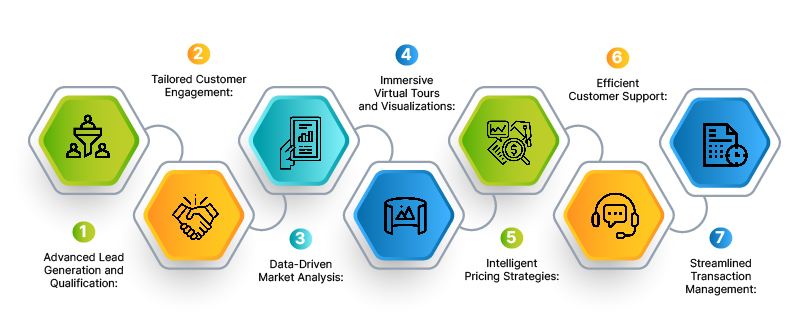
At the heart of this digital revolution lies AI, a technology that has the potential to reshape the way real estate is bought, sold, and marketed. Here’s a comprehensive look at how AI can empower real estate channel partners and revolutionize their approach:

AI Potential for Real Estate Channel Partners
    1. Advanced Lead Generation and Qualification

      AI tools for real estate agents are revolutionizing lead generation. AI can identify potential leads with remarkable accuracy by analyzing online behaviours and patterns. This empowers real estate professionals to focus their efforts on leads that are most likely to convert, resulting in higher efficiency and conversion rates.

    2. Tailored Customer Engagement

      The power of AI-driven algorithms allows real estate professionals to offer personalized recommendations and content to potential buyers. By understanding individual preferences, AI ensures that every interaction is relevant, fostering engagement and increasing the chances of conversion.

    3. Data-Driven Market Analysis

      One of the most impactful applications of AI is data analysis. AI algorithms can process enormous datasets and extract valuable insights about market trends, property values, and investment opportunities. With this information, real estate brokers can make informed decisions that increase profitability.

    4. Immersive Virtual Tours and Visualizations

      AI-driven virtual reality (VR) and augmented reality (AR) tools transform property viewings. Potential buyers can now take immersive virtual tours of properties, making remote property exploration possible and highly engaging.

    5. Intelligent Pricing Strategies

      Pricing properties accurately is crucial in real estate. AI can analyze many factors, including comparable sales, neighbourhood trends, and market demand, to suggest optimal pricing strategies. This ensures that properties are competitively priced while maximizing returns.

    6. Efficient Customer Support

      AI-powered chatbots are becoming integral to customer support in real estate. These automated assistants can handle routine queries, provide instant responses, and free up human professionals to focus on more complex interactions.

    7. Streamlined Transaction Management

      AI automates transaction-related processes, from documentation to contract management. This reduces the risk of errors, accelerates timelines, and improves overall customer satisfaction.

AI Advantage: Continuous Learning and Adaptation

To harness the full potential of AI, real estate professionals within the channel partner network must invest in continuous learning. Understanding how AI tools for real estate agents’ function and how AI impacts real estate leads is essential. Keeping up with the evolving landscape of AI for real estate leads to ensure that channel partners remain well-equipped to deliver unparalleled value to their clients.

The Future of Real Estate

In real estate sales and marketing, AI is more than just a tool; it’s the bridge to a future where innovation and success are seamlessly intertwined. The journey to AI-powered success begins with a simple choice: to adapt and innovate or to lag. As the real estate landscape evolves, those who seize the AI advantage are poised to shape the industry’s trajectory. As brokers, marketing companies, and channel partners, embracing AI isn’t just a strategy—it’s a commitment to shaping the future of real estate marketing and sales.

In a realm where data-driven decisions and personalized experiences are paramount, AI is the compass that guides channel partners to unprecedented heights. Elevate your real estate journey. Embrace AI’s transformative power today and unlock limitless possibilities.

Conclusion

The digital transformation sweeping through the real estate industry has ushered in a new era of possibilities, and real estate channel partners stand at the forefront of this evolution. By harnessing the power of AI tools for real estate agents, channel partners can navigate the complexities of the market with unprecedented accuracy and efficiency.

From predictive lead generation to personalized buyer engagement, AI offers a broad spectrum of benefits that enhance every aspect of real estate brokering. In a landscape where real estate broker and channel partner networks compete for success, embracing AI is not just a choice—it is a strategic imperative.

As real estate marketing companies and professionals seek to make their mark in this dynamic industry, integrating AI becomes a pivotal step toward ensuring growth, maximizing conversions, and delivering exceptional client value.

Categories
Real Estate Sales

PropTech and Real Estate Investment: Analyzing the Impact of Technology

In recent years, the real estate industry has undergone a significant transformation thanks to the emergence of PropTech (Property Technology). This integration of technology and real estate has revolutionized how investments are made in the sector. PropTech has empowered investors, real estate marketing companies, and channel partners by providing innovative tools and solutions that enhance decision-making processes, streamline operations, and increase profitability. In this blog, we will explore the visible impacts of PropTech on real estate investment and analyze how these technological advancements have influenced investment strategies.

  1. Improved Efficiency and Data-Driven Decisions:

    One of the primary impacts of PropTech on real estate investment is the ability to gather and analyze vast amounts of data. Real estate sales, marketing, and investment firms can now leverage powerful analytics tools to make informed decisions. Market trends can be identified using predictive models, enabling investors to make well-informed choices regarding property acquisitions, sales, and portfolio diversification. Real estate brokering has become more efficient as technology allows faster property searches, reducing the time it takes to find suitable investment opportunities.

  2. Enhanced Customer Experience and Real Estate Marketing:

    proptech real estate investment

    PropTech has transformed how real estate is marketed, benefiting investors and sellers. With the rise of virtual reality (VR) and augmented reality (AR), potential buyers can explore properties remotely, saving time and effort. Additionally, real estate marketing companies can create immersive experiences through 3D tours and interactive floor plans, increasing engagement and attracting a wider audience. These advancements have revolutionized sales, allowing investors to reach a global market and make data-driven decisions targeting specific demographics.

  3. Automation and Streamlined Operations:

    Technology has brought automation to real estate investment, simplifying administrative tasks and reducing human error. Real estate investment companies can utilize property management software to automate rent collection, tenant screening, and maintenance requests. This streamlining of operations allows investors to focus more on strategic decision-making and growth opportunities. Real estate channel partners can efficiently manage property listings by leveraging technology, ensuring accurate and up-to-date information for potential investors.

  4. Access to Alternative Investment Opportunities;

    PropTech has democratized real estate investment by providing access to previously inaccessible markets and investment opportunities. Online platforms have emerged that allow individuals to invest in real estate properties with smaller budgets, providing a more inclusive investment landscape. These platforms offer fractional ownership and crowdfunding options, enabling investors to diversify their portfolios and mitigate risks. Real estate investment companies can now tap into a more comprehensive network of potential investors, expanding their reach and creating more growth opportunities.

  5. Improved Transparency and Risk Management:

    Transparency has always been crucial in real estate investment. With the aid of PropTech, investors can now access comprehensive data and analytics, facilitating better risk assessment and management. Real estate investment companies can provide real-time updates on property performance, cash flows, and market trends, allowing investors to make informed decisions. This transparency builds trust between investors and real estate professionals, ultimately leading to more successful and long-lasting partnerships.

  6. Enhanced Market Analysis and Investment Forecasting:

    proptech real estate investment

    PropTech has significantly improved the real estate industry’s market analysis and investment forecasting. Advanced and machine learning algorithms can now process vast amounts of data to identify investment opportunities and predict future market trends. Real estate investment companies can leverage these technologies to assess property valuations, rental yields, and potential returns on investment. This data-driven approach enables investors to make more accurate and informed decisions, reducing the risks associated with investment.

  7. Streamlined Due Diligence and Documentation Processes:

    Traditionally, real estate investment involved cumbersome paperwork and extensive due diligence processes. However, with PropTech, these processes have become streamlined and efficient. Digital platforms and software solutions allow investors to conduct thorough due diligence, including property inspections, legal documentation reviews, and financial analyses, all in a centralized and secure manner. This saves time, reduces the likelihood of errors, and ensures compliance with regulatory requirements.

  8. Remote Property Management and Monitoring:

    proptech real estate investment

    Another notable impact of PropTech on real estate investment is the ability to manage and monitor properties remotely. IoT (Internet of Things) devices and innovative home technologies enable investors to remotely control and monitor property systems, such as security, HVAC, and energy usage. Real-time data and alerts provide valuable insights into property performance and enable prompt responses to maintenance issues, reducing costs and improving overall property management efficiency.

  9. Sustainable and Green Investments:

    With growing awareness of environmental concerns, PropTech has facilitated sustainable and green investments in the real estate sector. Technology solutions such as energy management systems, bright lighting, and water conservation tools allow investors to optimize resource usage, reduce carbon footprints, and lower operating costs. These sustainable practices align with environmental goals and contribute to long-term value appreciation and tenant satisfaction.

  10. Disruption and Collaboration Opportunities:

    proptech real estate investment

    PropTech has also fostered disruption and collaboration within the real estate industry. Startups and innovative companies are challenging traditional models and introducing new approaches to real estate investment. Collaborative platforms connect investors, developers, and professionals, facilitating knowledge sharing, co-investment opportunities, and joint ventures. This collaborative ecosystem stimulates innovation and creates a dynamic environment where ideas can thrive.

Conclusion

PropTech has brought about a paradigm shift in the real estate investment landscape. Technology integration has enhanced efficiency, improved customer experiences, streamlined operations, and expanded investment opportunities. As real estate marketing companies, channel partners, and investment firms embrace technological advancements, the industry will evolve further. Investors and industry professionals need to stay up to date with the latest PropTech innovations to maximize their investment potential and adapt to the changing market dynamics. By harnessing the power of technology, real estate investment can become more accessible, transparent, and profitable for everyone involved.

Categories
Real Estate Sales

Digital Transformation of Real Estate: How Technology is Revolutionizing the Industry

In today’s digital world, the old ways of real estate marketing are quickly becoming obsolete. With digitalization permeating every aspect of our lives, the real estate industry has taken a significant position on the online platform. Everything is going digital, from marketing to sales. This shift to the digital realm has opened up new opportunities and allowed real estate professionals to close more deals and build a strong brand presence.

In this ever-changing landscape, embracing digital transformation has become imperative for real estate organizations to stay competitive and deliver exceptional client experiences. There needs to be more than the traditional manual processes and outdated technologies of the past to meet the demands of today’s market.

This blog post will provide valuable insights and actionable strategies to navigate the digital landscape of real estate successfully.

  1. Understanding the Need for Digital Transformation

    Understanding the Need for Digital Transformation

    The real estate industry has traditionally been known for its reliance on manual processes, such as endless documentation, phone calls, and in-person interactions. However, these outdated practices are inefficient and time-consuming, leading to delays, errors, and missed opportunities. Digital transformation offers a way to streamline operations, automate processes, and enhance productivity. Real estate companies can gain valuable insights, make data-driven decisions, and improve overall efficiency by leveraging technologies like artificial intelligence, machine learning, and data analytics.

  2. Defining the Digital Transformation Strategy

    Before embarking on the digital transformation journey, real estate organizations must define a clear strategy that aligns with their business goals and objectives. This strategy should outline the desired outcomes, identify critical areas for improvement, and establish a roadmap for implementation. To ensure a shared vision and commitment to change, it is crucial to involve all stakeholders, from top-level executives to front-line employees.

    A well-defined strategy sets the foundation for successful digital transformation and helps real estate companies navigate potential challenges.
  3. Real Estate Technology Partners

    Real Estate Technology Partners

    Implementing digital transformation requires expertise and specialized knowledge. Real estate organizations should seek technology partners who can provide the necessary solutions, guidance, and support throughout the transformation process. Beyond mere software vendors, these partners should act as trusted advisors, understanding the unique needs and challenges of the real estate industry. Collaborating with technology partners who deeply understand the industry can help organizations select the right tools, integrate systems seamlessly, and unlock the full potential of digital transformation.

  4. PropTech

    Proptech

    The emergence of PropTech has brought a seismic shift in the way real estate operates. By leveraging cutting-edge technologies such as artificial intelligence, machine learning, the Internet of Things (IoT), and big data analytics, PropTech solutions offer unprecedented opportunities for optimizing property management, enhancing customer experiences, and streamlining operations.

    • Streamlined Property Management: PropTech solutions have revolutionized property management by offering comprehensive tools and platforms to simplify processes. From business management to maintenance requests and financial reporting, it streamlines operations, minimizes paperwork and improves overall efficiency.

    • Data-Driven Decision Making: Data has become the lifeblood of the real estate industry, and Proptech harnesses its power like never before. Integrating data analytics and predictive modelling enables real estate professionals to make informed decisions based on market trends, investment opportunities, and risk assessments. This data-driven approach empowers stakeholders to mitigate risks and optimize investment returns.

  5. Implementing Process Automation

    Process automation is one of the critical pillars of digital transformation in real estate. Real estate companies can reduce errors, increase efficiency, and free up valuable time for employees to focus on more strategic activities by automating repetitive, manual tasks. Process automation revolutionizes how real estate organizations operate, from automating document management and contract generation to streamlining property management and tenant onboarding.

  6. Enhancing Customer Experiences

    Enhancing Customer Experiences

    Digital transformation is not just about optimizing internal processes but is also crucial in enhancing customer experiences. Today’s tech-savvy clients expect seamless, personalized interactions and access to information anytime, anywhere. Real estate companies can leverage digital tools to create user-friendly websites and mobile apps, provide virtual property tours, and facilitate online communication channels. By embracing digital channels, real estate organizations can engage with customers more meaningfully, build stronger relationships, and ultimately differentiate themselves from the competition.

  7. Ensuring Security and Compliance

    Real estate companies must prioritize data security and compliance as they digitize their operations. The increased reliance on digital systems and the collection of sensitive information creates new risks and challenges. Organizations must invest in robust cybersecurity measures, implement encryption technologies, and ensure compliance with relevant data protection regulations. Real estate companies can build trust with their clients and protect their valuable assets from potential threats by taking a proactive approach to security and compliance.

  8. Monitoring and Continuous Improvement

    Monitoring and Continuous Improvement

    Digital transformation is an ongoing journey rather than a one-time event. Real estate organizations must establish mechanisms for monitoring the effectiveness of digital solutions and continuously improve their processes. By leveraging data analytics and performance metrics, organizations can gain valuable insights into their operations, identify areas for optimization, and make data-driven decisions. Continuous improvement ensures that real estate companies stay agile, adapt to evolving market conditions, and stay ahead of the competition.

  9. BeyondWalls: India’s Leading Prop-tech Ecosystem

    If you are looking for the best Proptech solution, BeyondWalls is the market’s leading tech-driven platform, facilitating seamless collaboration between Real Estate Developers and Channel partners (brokers). With the backing of Aurum PropTech and powered by the expertise of BeyondWalls Technologies, BeyondWalls aims to be the transparent and trusted one-stop solution for India’s entire real estate ecosystem.

    Discover the unmatched excellence of BeyondWalls and enjoy a hassle-free, end-to-end experience for all your home-seeking needs.

Conclusion

Digital transformation in the real estate industry has emerged as a game-changer, empowering organizations to unlock new opportunities, drive operational efficiencies, and deliver exceptional customer experiences. Real estate companies can successfully transition from legacy systems to modern, innovative solutions by following the comprehensive roadmap outlined in this blog post and embracing the power of digital transformation positions organizations at the forefront of the evolving real estate landscape. It is time to embrace the future, leverage technology to its fullest potential, and thrive in this digital age.

Categories
Real Estate Sales

How You Can Sell 50% off Inventory During Project Launch

Real estate development encompasses a comprehensive business process that involves various activities, including leasing newly developed properties and selling them to potential buyers. Developers play a crucial role in coordinating these activities, turning concepts and plans into tangible real estate assets. During the launch phase, effective advertising campaigns and targeted outreach to the right audience can result in selling up to 50% of the project inventory. That’s where Beyond Walls comes in. We specialize in executing impactful ad campaigns and managing incoming leads for you. Our team will identify the most suitable advertising platforms, capture and segment leads, and run 360-degree campaigns using top-notch engagement strategies. You’ll receive real-time insights and updates on all your campaigns, with detailed reports on your ad spend from your dedicated manager.

This article aims to explore the impressive capabilities of BeyondWalls, a cutting-edge sales and marketing platform that empowers businesses to achieve exceptional results by selling over 50% of their inventory during critical launch periods. By delving into the unique features and functionalities, we will uncover how this PropTech can drive extraordinary success for businesses in maximizing their sales and exceeding their targets during crucial product or service introduction phases.

  1. Simplifying Property Selling for You

    Simplifying Property Selling for You

    Any real estate project launch is an opportunity to convert leads to the finish line. With a technology-driven approach and a team of industry experts, this is your reliable real estate sales partner. Benefit from our comprehensive support system, exclusive leads, real estate marketing assistance, and advanced technology tools to effortlessly surpass your sales targets.

  2. Comprehensive Marketing Solutions

    Comprehensive Marketing Solutions

    BeyondWalls offers a range of cutting-edge marketing tools that revolutionize the real estate industry. One such tool is virtual tours, which allow potential buyers to explore properties from the comfort of their homes. With interactive 3D renderings, buyers can visualize the property’s layout and design in detail. Immersive walkthroughs take the experience to another level, offering a realistic and engaging exploration of the property.

    These innovative marketing solutions are crucial in capturing buyer interest and enhancing engagement. Virtual tours provide convenience and accessibility, enabling buyers to explore properties remotely and narrow down their choices. 3D renderings provide a realistic visualization of the property’s potential, helping buyers envision themselves in the space. Immersive walkthroughs create an emotional connection, allowing buyers to experience the property’s ambiance and atmosphere.

    By utilizing these tools, sellers are empowered to showcase their properties in the most captivating and immersive way possible. This attracts more potential buyers and increases their interest level, leading to higher engagement and, ultimately, higher conversion rates. In today’s digital age, these innovative marketing solutions have become essential in creating a compelling and unforgettable real estate experience.

  3. Targeted Lead Generation

    Targeted Lead Generation

    Leveraging advanced data analytics and digital marketing strategies to identify and target potential buyers actively searching for properties, our market trend analysis, buyer preferences, and online behaviour can precisely target its marketing campaigns to reach the right audience. This targeted approach maximizes conversion rates by connecting with buyers actively interested in purchasing properties. The benefits of reaching the right audience include higher engagement, increased inquiries, and a higher likelihood of successful conversions, leading to greater sales success for sellers.

  4. Intelligent CRM and Sales Automation

    Intelligent CRM and Sales Automation

    Effective lead management is crucial in real estate online sales, and we understand its significance. With its intelligent CRM system, we streamline lead management by capturing, organizing, and nurturing leads efficiently. The platform’s features include automated follow-ups and personalized communication, ensuring timely engagement with potential buyers. This simplifies the real estate sales process, increases efficiency, and improves conversion rates. Our intelligent CRM system empowers real estate professionals to effectively manage leads and optimize their sales efforts for greater success in the online sales landscape.

  5. Advantage: India’s End-to-End Integrated Proptech Ecosystem

    Advantage: India's End-to-End Integrated Proptech Ecosystem

    From project planning to execution, we specialize in maximizing real estate sales. Our thorough market research helps determine the perfect pricing strategy, while our creative communication ideas and collaterals give you a competitive edge for better project sales. With a strategic sales approach and channel partner network, we ensure target sales and provide training and deployment support. Our market analysis services provide valuable insights on competitors, product positioning, and future trends to effectively market your property. We help promote your unique value proposition through innovative ideas, actionable plans, and seamless digital campaigns that generate high consumer attention and establish strong brand connections. Our expertise extends to optimizing the sales experience, including suggestions for sales office layout, customer flow, on-site branding, and even F&B recommendations.

    We assist in contacting and following up with potential customers, streamlining information delivery, and understanding their requirements through our custom-built technology systems. With our robust mandate services, we take the responsibility of selling your property, allowing you to focus on project management and business growth. Trust us to handle the sales process efficiently, maximizing your real estate sales and ensuring a successful launch and continuous sales momentum.

  6. Inventory management

    Inventory management

    BeyondWalls revolutionizes inventory management for real estate agencies, offering a suite of features and tools that empower developers and agents. With our platform, you can efficiently track, monitor, and update inventory in real time, ensuring accurate availability information for prospective buyers. Streamlined inventory management leads to improved sales outcomes by reducing errors, maximizing marketing efforts, and enabling prompt response to inquiries. Experience the advantages of seamless inventory management with BeyondWalls and achieve remarkable sales success during the launch of your real estate projects.

Conclusion

Discover BeyondWalls, the innovative sales and marketing platform that simplifies property selling and maximizes sales success. Through comprehensive market research, creative communication strategies, and targeted advertising campaigns, BeyondWalls helps you surpass your sales targets and achieve remarkable results during launch periods. With advanced data analytics and a powerful CRM system, BeyondWalls identifies and engages potential buyers actively seeking properties, ensuring higher conversion rates. Moreover, the platform offers seamless inventory management, enabling real-time tracking and updates to attract prospective buyers. Simplify your property selling process and elevate your sales with BeyondWalls. Leverage its expertise and comprehensive suite of tools to achieve unparalleled success in the real estate industry.